Introduction
You have decided to build an AI application. Now comes a critical question: should you use open source models or proprietary ones?
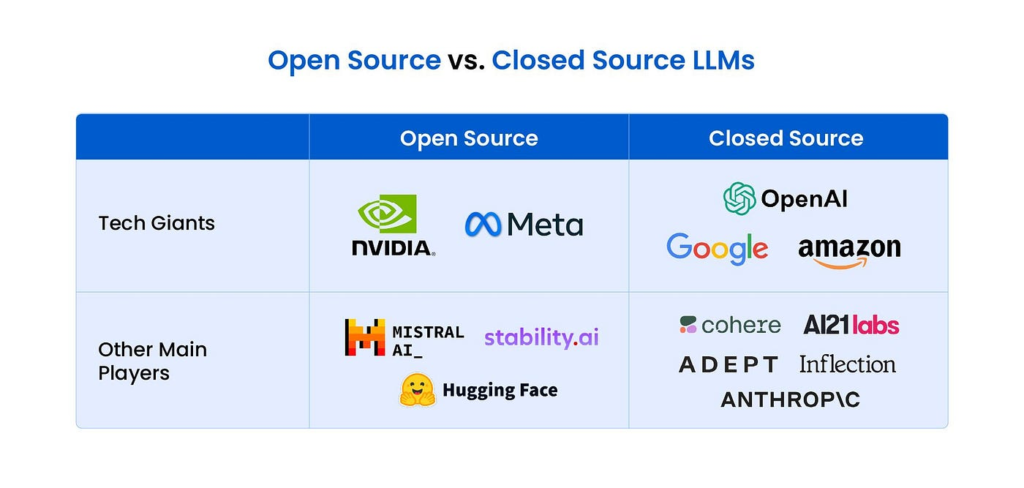
Open source AI—like Llama, Mistral, and Stable Diffusion—offers transparency, customization, and no vendor lock-in. Proprietary AI—like OpenAI’s GPT, Google’s Gemini, and Anthropic’s Claude—offers polished performance, enterprise support, and ease of use. Both have passionate advocates. Both have legitimate trade-offs.
The choice is not simply about cost. It is about control, privacy, performance, compliance, and long-term strategy. A startup building a prototype may choose differently than a healthcare enterprise with strict data privacy requirements. A research lab may have different needs than a consumer-facing product company.
This article compares open source and proprietary AI across key dimensions: cost, customization, transparency, performance, security, compliance, and support. It will help you understand the trade-offs and make an informed decision for your organization.
For a foundational understanding of how AI models are developed and validated, you may find our guide on How to Measure AI Model Performance helpful as a starting point.
Throughout, we will highlight how MHTECHIN helps organizations navigate the open source vs proprietary decision—and build solutions that fit their unique needs.
Section 1: Defining Open Source and Proprietary AI
1.1 What Is Open Source AI?
Open source AI refers to artificial intelligence models, frameworks, and tools whose source code and often model weights are publicly available under licenses that permit use, modification, and distribution.
Examples include:
- Large language models. Llama (Meta), Mistral, Falcon, Gemma (Google), BLOOM
- Image generation. Stable Diffusion, OpenJourney
- Frameworks. TensorFlow, PyTorch, Hugging Face Transformers
- Tools. LangChain, LlamaIndex
Open source AI allows organizations to download models, run them on their own infrastructure, modify them for specific use cases, and build applications without vendor dependency.
1.2 What Is Proprietary AI?
Proprietary AI refers to artificial intelligence models and tools that are owned by companies, accessed via APIs or licensed software, with restrictions on modification, redistribution, and often on how the model can be used.
Examples include:
- Large language models. OpenAI GPT-4/4o, Google Gemini, Anthropic Claude, Microsoft Copilot
- Image generation. DALL·E, Midjourney, Adobe Firefly
- Platforms. AWS Bedrock, Google Vertex AI, Azure OpenAI Service
Proprietary AI offers polished, production-ready models accessible via simple APIs, with enterprise support, security guarantees, and continuous updates.
1.3 The Spectrum, Not a Binary
The open source vs proprietary distinction is not always clear-cut. Some models are “open weights” but not fully open source (code may be proprietary). Some proprietary vendors offer hosted open source models. And some organizations use hybrid approaches—open source models with proprietary fine-tuning or hosted on proprietary infrastructure.
Understanding the spectrum helps you make nuanced decisions.
Section 2: Cost Comparison
2.1 Open Source AI Costs
Upfront costs.
- Compute infrastructure. Running large models requires GPUs or TPUs—significant hardware or cloud costs
- Engineering time. Deployment, optimization, and maintenance require skilled staff
- Storage. Model weights can be tens to hundreds of gigabytes
Ongoing costs.
- Cloud compute. Per-hour or per-instance costs for inference
- Maintenance. Keeping models updated, monitoring performance
- Scaling. Adding capacity as usage grows
Hidden costs.
- Optimization. Making models run efficiently on your infrastructure
- Security. Securing self-hosted models
- Compliance. Ensuring self-hosted deployments meet regulatory requirements
2.2 Proprietary AI Costs
Upfront costs.
- Minimal. Sign up for an API key; no infrastructure investment
Ongoing costs.
- API fees. Per-token or per-call pricing (e.g., OpenAI charges per 1M tokens)
- Volume discounts. Enterprise agreements for high usage
- Potential vendor lock-in. Switching costs if you build deeply on a proprietary API
Hidden costs.
- Data transfer. Moving data to/from API endpoints
- Rate limits. Scaling may require enterprise agreements
- Vendor dependency. Pricing changes, feature deprecation, policy shifts
2.3 When Open Source Is Cheaper
Open source can be more cost-effective when:
- You have very high volume (millions of calls per day)
- You have existing GPU infrastructure
- You can optimize models to run efficiently
- You have in-house ML engineering expertise
2.4 When Proprietary Is Cheaper
Proprietary can be more cost-effective when:
- You are prototyping or have low to moderate volume
- You lack in-house ML infrastructure expertise
- You need to move quickly without infrastructure setup
- API pricing fits your usage pattern
Section 3: Customization and Control
3.1 Open Source: Full Control
Open source AI offers complete control:
- Fine-tuning. Modify models on your own data for domain-specific tasks
- Architecture changes. Adapt model structure for specific needs
- Inference optimization. Run models on your hardware, with your latency requirements
- No vendor lock-in. Switch models, providers, or infrastructure freely
- Transparency. Inspect model weights, understand biases, audit behavior
3.2 Proprietary: Limited Control
Proprietary AI offers limited customization:
- Fine-tuning. Some vendors offer fine-tuning APIs (OpenAI, Google), but with restrictions
- No architecture changes. You use the model as provided
- Inference constraints. Latency, throughput, and geography determined by vendor
- Vendor lock-in. Migrating away requires rebuilding applications
- Limited transparency. Model internals are secret; you rely on vendor claims
3.3 When Control Matters Most
Control is critical when:
- You need domain-specific models. Fine-tuning on proprietary data is essential
- You have strict latency requirements. Edge deployment or ultra-low latency
- You require auditability. Regulated industries need to inspect model behavior
- You want to avoid vendor dependency. Strategic independence is a priority
Section 4: Performance and Quality
4.1 Proprietary AI: Polished Performance
Proprietary models often lead on:
- Benchmark scores. GPT-4, Gemini, Claude consistently top public benchmarks
- Multimodal capabilities. Tightly integrated text, image, audio, video
- Instruction following. Polished response quality for general tasks
- Continuous improvement. Vendors update models regularly
4.2 Open Source: Catching Up Rapidly
Open source models are closing the gap:
- Llama 3. Meta’s open models rival GPT-4 on many benchmarks
- Mistral. High-performance models with favorable efficiency
- Specialized models. Open source excels in specific domains (code, science, medicine) when fine-tuned
- Transparency. You can understand exactly what the model can and cannot do
4.3 The Performance Trade-Off
Choose proprietary when:
- You need state-of-the-art general performance out of the box
- You lack resources for fine-tuning and optimization
- Multimodal integration (text+image+audio) is required
Choose open source when:
- Domain-specific performance matters more than general benchmarks
- You can fine-tune on your data to exceed general models
- You need to understand model limitations deeply
Section 5: Privacy, Security, and Compliance
5.1 Open Source: Data Privacy Advantages
Open source AI offers strong privacy benefits:
- Data never leaves your infrastructure. You control where data is processed
- No third-party access. Sensitive data is not sent to external APIs
- Compliance control. You manage security, access, and audit trails
- No data retention concerns. No risk of vendor using your data for training
5.2 Proprietary: Privacy Considerations
Proprietary AI raises privacy questions:
- Data sent to vendor. Prompts and data are transmitted to external servers
- Data usage policies. Some vendors may use data for model improvement (opt-out available)
- Data residency. May not meet requirements for data localization
- Auditability. Limited visibility into vendor security practices
5.3 Compliance Requirements
Regulated industries (healthcare, finance, government) often require open source to maintain control over data and ensure compliance with HIPAA, GDPR, and other regulations.
When data cannot leave your infrastructure, open source is the only option. Healthcare patient data, financial transaction data, and classified information often cannot be sent to external APIs.
5.4 Security Considerations
| Aspect | Open Source | Proprietary |
|---|---|---|
| Data exposure | None—data stays on your infrastructure | Data transmitted to vendor |
| Attack surface | You manage security; risk of misconfiguration | Vendor manages security; risk of vendor breach |
| Auditability | Full visibility into model and infrastructure | Limited to vendor-provided logs |
| Compliance | You control compliance implementation | Vendor must meet compliance standards |
Section 6: Transparency and Trust
6.1 Open Source: Full Transparency
Open source AI offers complete visibility:
- Model weights available. You can inspect, analyze, and audit
- Training data disclosed (sometimes). Some open models disclose training data composition
- No black box. You can understand model behavior through testing and analysis
- Community scrutiny. Independent researchers can validate claims
6.2 Proprietary: Limited Transparency
Proprietary AI offers minimal visibility:
- Model weights secret. You cannot inspect or audit
- Training data undisclosed. No visibility into data sources or biases
- Black box. You must trust vendor claims about capabilities and safety
- Limited independent scrutiny. Only vendor-authorized research
6.3 When Transparency Matters
Transparency is critical for:
- High-stakes decisions. Healthcare, criminal justice, hiring, credit
- Regulatory compliance. Auditing model behavior for fairness
- Risk management. Understanding limitations and potential failure modes
- Research and education. Studying model behavior
Section 7: Support and Ecosystem
7.1 Proprietary: Enterprise Support
Proprietary AI offers:
- Dedicated support. SLAs, account teams, technical support
- Managed services. Infrastructure, scaling, updates handled by vendor
- Integration. Pre-built integrations with cloud platforms
- SLA guarantees. Uptime, latency, throughput commitments
7.2 Open Source: Community Support
Open source relies on:
- Community forums. Hugging Face, GitHub, Discord, Stack Overflow
- Documentation. Varies by project; some excellent, some sparse
- Consulting partners. Companies like MHTECHIN provide enterprise support
- Self-service. You manage infrastructure, scaling, updates
7.3 When Support Matters
Choose proprietary when:
- You need SLAs and guaranteed support
- You lack in-house ML operations expertise
- You want “set and forget” infrastructure
Choose open source when:
- You have in-house ML engineering expertise
- You can leverage community support
- You prefer to build internal capabilities
Section 8: How to Choose: A Decision Framework
8.1 Key Questions to Ask
| Question | Open Source Favored If | Proprietary Favored If |
|---|---|---|
| What is your data sensitivity? | Data cannot leave your infrastructure | Data can be sent to external APIs |
| What is your volume? | Very high volume (cost advantage) | Low to moderate volume |
| Do you need customization? | Heavy fine-tuning, architecture changes | Minimal customization needed |
| What is your infrastructure expertise? | In-house ML engineering expertise | No in-house ML ops |
| What are your transparency requirements? | Auditability, compliance, fairness testing | Black box acceptable |
| What is your timeline? | Time to build infrastructure | Immediate deployment |
| What is your risk tolerance? | Manage your own security and uptime | Rely on vendor SLAs |
8.2 Hybrid Approaches
Many organizations use hybrid strategies:
- Prototype with proprietary, deploy with open source. Validate quickly with APIs, then build custom open source for production
- Open source for sensitive data, proprietary for general tasks. Keep private data on-premises; use APIs for non-sensitive workloads
- Fine-tuned open source models hosted on proprietary infrastructure. Run open source models on AWS, Azure, or Google Cloud for managed infrastructure with open source control
8.3 Common Use Cases
| Use Case | Recommendation |
|---|---|
| Prototyping / MVP | Proprietary (fastest path to working prototype) |
| High-volume production | Open source (cost efficiency at scale) |
| Healthcare / regulated | Open source (data privacy, compliance) |
| Domain-specific expert | Open source with fine-tuning (customization) |
| General-purpose assistant | Proprietary (polished performance) |
| Research / education | Open source (transparency, learning) |
| Edge deployment | Open source (must run on device) |
Section 9: How MHTECHIN Helps with Open Source and Proprietary AI
Navigating the open source vs proprietary decision requires expertise in both approaches. MHTECHIN helps organizations choose the right path—and build solutions that fit their unique needs.
9.1 For Strategy and Assessment
MHTECHIN helps organizations:
- Assess your use case. Data sensitivity, volume, customization needs, infrastructure expertise
- Evaluate trade-offs. Cost, control, performance, compliance
- Recommend the right approach. Open source, proprietary, or hybrid
9.2 For Open Source Implementation
MHTECHIN provides open source AI expertise:
- Model selection. Llama, Mistral, Stable Diffusion—which fits your needs?
- Deployment. On-premises, cloud, edge—infrastructure setup
- Fine-tuning. Adapt models to your domain with your data
- Optimization. Quantization, pruning, inference acceleration
- Ongoing support. Monitoring, updates, maintenance
9.3 For Proprietary AI Integration
MHTECHIN helps organizations use proprietary AI effectively:
- API integration. Connect to OpenAI, Google, Anthropic, AWS Bedrock
- Prompt engineering. Optimize for quality and cost
- Cost management. Monitor usage, optimize token consumption
- Fallback strategies. Hybrid approaches with open source backup
9.4 For Hybrid Solutions
MHTECHIN designs hybrid architectures:
- Sensitive data path. Open source for data that cannot leave your infrastructure
- General path. Proprietary APIs for non-sensitive, general tasks
- Unified orchestration. Manage both approaches in a single application
9.5 The MHTECHIN Approach
MHTECHIN’s AI practice is vendor-agnostic and use-case driven. The team helps organizations choose the right tool for the job—whether open source, proprietary, or hybrid—and builds solutions that deliver real business value.
Section 10: Frequently Asked Questions
10.1 Q: What is the difference between open source and proprietary AI?
A: Open source AI provides model weights and code that you can download, modify, and run on your own infrastructure. Proprietary AI is owned by companies, accessed via APIs or licensed software, with restrictions on modification and redistribution.
10.2 Q: Which is cheaper: open source or proprietary AI?
A: It depends. For low to moderate volume, proprietary APIs are often cheaper because you pay only for usage and avoid infrastructure costs. For very high volume, open source can be cheaper because you eliminate API per-call costs, though you incur infrastructure and engineering costs.
10.3 Q: Is open source AI as good as proprietary?
A: For many tasks, open source models are approaching proprietary performance. Llama 3, Mistral, and others rival GPT-4 on many benchmarks. With fine-tuning on domain-specific data, open source can sometimes exceed general proprietary models. However, proprietary models still lead on multimodal capabilities and polished general performance.
10.4 Q: Can I fine-tune proprietary AI models?
A: Some proprietary vendors offer fine-tuning APIs (OpenAI, Google), allowing you to adapt models with your data. However, fine-tuning is limited—you cannot modify model architecture or run on your own infrastructure. Fine-tuned models remain on vendor infrastructure.
10.5 Q: Which is more private: open source or proprietary?
A: Open source is more private because you run models on your own infrastructure—data never leaves your control. Proprietary APIs require sending data to vendor servers, raising privacy and data residency concerns.
10.6 Q: Can I use open source AI for regulated industries?
A: Yes—and often it is the only option. Healthcare (HIPAA), finance (financial privacy), and government applications often require data to remain on-premises. Open source allows you to meet these requirements.
10.7 Q: What are the risks of open source AI?
A: Risks include: you are responsible for security, infrastructure, and compliance; model performance may require optimization; community support varies; and licensing may impose restrictions on commercial use (check licenses carefully).
10.8 Q: What are the risks of proprietary AI?
A: Risks include: vendor lock-in (difficult to migrate), data privacy concerns (data sent to vendor), pricing changes (vendor can raise rates), feature deprecation (vendor can discontinue capabilities), and limited transparency (you cannot audit model behavior).
10.9 Q: Can I use both open source and proprietary AI together?
A: Yes—hybrid approaches are common. Use proprietary for general tasks or prototyping, open source for sensitive data or high-volume workloads. Many organizations use APIs for low-volume tasks and open source for high-volume production.
10.10 Q: How does MHTECHIN help with open source vs proprietary decisions?
A: MHTECHIN helps organizations assess their use case, evaluate trade-offs, and choose the right approach—whether open source, proprietary, or hybrid. We then implement solutions that fit your needs, with expertise in both open source deployment and proprietary API integration.
Section 11: Conclusion—The Right Tool for the Job
Open source and proprietary AI are not enemies—they are tools for different jobs. Open source offers control, privacy, transparency, and cost efficiency at scale. Proprietary offers polished performance, ease of use, and enterprise support. Neither is universally “better.”
The right choice depends on your data, your volume, your infrastructure expertise, your regulatory requirements, and your strategic goals. A healthcare organization with sensitive patient data may choose open source. A startup building a prototype may choose proprietary. A mature enterprise may use both—open source for core workloads, proprietary for specialized capabilities.
For organizations serious about AI, the question is not “open source or proprietary?” but “how do we use the right tools for each part of our business?” With clear understanding of trade-offs and a flexible strategy, you can build AI that delivers value without compromising on what matters to you.
Ready to navigate the open source vs proprietary decision? Explore MHTECHIN’s AI advisory and implementation services at www.mhtechin.com. From strategy through deployment, our team helps you choose the right tools for your needs.
This guide is brought to you by MHTECHIN—helping organizations navigate the AI landscape, from open source to proprietary and beyond. For personalized guidance on AI strategy or implementation, reach out to the MHTECHIN team today.

Leave a Reply