Introduction
The AI Revolution in Financial Services
The financial industry has always been data-driven at its core. From the earliest stock tickers to modern electronic trading platforms, finance has consistently leveraged technology to gain competitive advantage. However, the integration of Artificial Intelligence marks a fundamental shift—transforming finance from a reactive, historically-analytical field into a real-time, predictive, and highly automated ecosystem.
In 2026, AI is no longer an experimental technology in financial services; it is the backbone of operations across global markets. From executing trades in microseconds to detecting complex fraud patterns that would evade human detection, and from automating regulatory compliance to personalizing investment advice, AI is redefining how financial institutions operate, compete, and serve their clients.
The numbers underscore this transformation. According to industry estimates, global spending on AI in financial services reached $35 billion in 2025, with projected annual growth of 23% through 2030. Over 70% of financial institutions now deploy AI in at least one core business function, up from just 30% in 2020. In capital markets, algorithmic trading accounts for approximately 60-75% of equity trading volume in developed markets, with AI-driven strategies representing a rapidly growing segment of that volume.
Leading technology organizations—including Google, Microsoft, OpenAI, and specialized fintech AI firms—are enabling advanced AI capabilities that financial firms leverage for competitive advantage. Google’s Vertex AI provides machine learning infrastructure for financial modeling, while Microsoft’s Azure AI offers compliance-ready tools for regulated industries. OpenAI’s models are increasingly deployed for financial analysis, sentiment assessment, and automated reporting.
This comprehensive guide by MHTECHIN explores three major applications of AI in finance:
- Algorithmic trading — how AI systems execute trades with superhuman speed and precision
- Risk assessment — how machine learning models identify and mitigate financial risks
- Compliance and regulation — how AI automates the complex web of regulatory requirements
We examine the latest developments of 2026, analyze benefits and challenges, and provide actionable insights for financial institutions seeking to harness AI’s transformative potential while managing its risks.
Understanding AI in Financial Services
What is AI in Finance?
AI in finance encompasses the application of machine learning (ML), deep learning, natural language processing (NLP), computer vision, generative AI, and reinforcement learning to financial contexts. These technologies enable financial institutions to:
- Analyze massive financial datasets—market data, transaction records, alternative data sources, and unstructured content—at scales impossible for human analysts
- Predict market trends, price movements, credit risk, and customer behavior with increasing accuracy
- Automate decision-making across trading, lending, fraud detection, and customer service
- Detect anomalies, suspicious activities, and emerging risks in real-time
- Generate reports, insights, and communications with minimal human intervention
Why AI is Critical for Modern Finance
Financial markets are characterized by several challenging attributes that make AI not merely advantageous but essential:
| Challenge | Description | AI Solution |
|---|---|---|
| High volatility | Markets react to news, events, and sentiment in milliseconds | AI systems process information and execute responses faster than humans |
| Massive data volumes | Millions of transactions daily, thousands of market data feeds | AI analyzes at scales impossible for human analysts |
| Real-time requirements | Trading, fraud detection require millisecond responses | AI enables automated decisions at required speeds |
| Regulatory complexity | Overlapping frameworks with severe penalties | AI manages documentation, monitoring, and reporting burden |
| Sophisticated fraud | Increasingly complex criminal schemes | AI identifies patterns that rule-based systems miss |
AI in Algorithmic Trading
What is Algorithmic Trading?
Algorithmic trading—often called “algo trading”—uses computer programs to execute trades automatically based on predefined rules, mathematical models, or AI-driven strategies. These algorithms analyze market data, identify opportunities, and place orders without human intervention.
The evolution of algorithmic trading spans several generations:
| Generation | Period | Characteristics |
|---|---|---|
| First | 1970s-1990s | Simple rule-based execution algorithms for order splitting |
| Second | 2000s-2010s | Statistical arbitrage using historical data analysis |
| Third | 2010s-2020 | Machine learning models for pattern recognition |
| Fourth | 2020-present | Deep learning, reinforcement learning, continuous adaptation |
Today, algorithmic trading accounts for approximately 60-75% of equity trading volume in U.S. markets, with similar penetration in futures, options, and foreign exchange. Within this landscape, AI-driven strategies represent the fastest-growing segment.
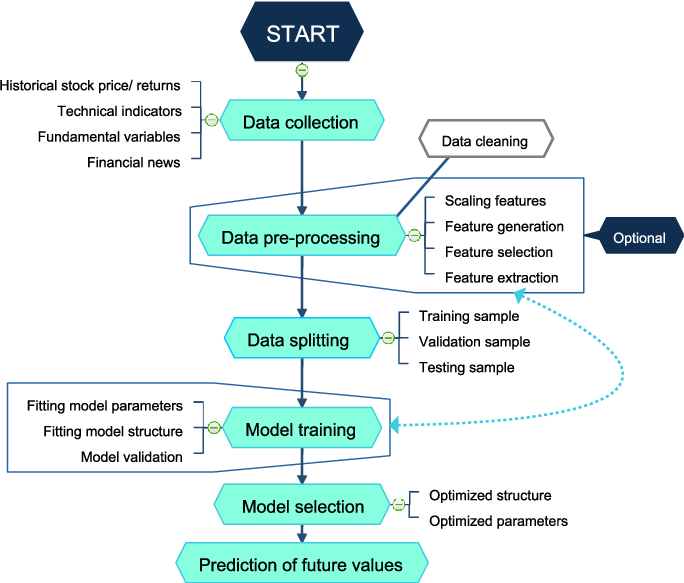
How AI Enhances Trading Systems
Predictive Analytics and Forecasting
AI models analyze vast datasets to forecast price movements and identify trading opportunities:
Time Series Forecasting: Deep learning models—particularly Long Short-Term Memory (LSTM) networks and Transformer architectures—analyze historical price, volume, and volatility data to predict short-term price movements. Unlike traditional econometric models, these systems capture complex nonlinear relationships and temporal dependencies.
Alternative Data Integration: AI systems incorporate diverse data sources beyond price and volume:
- Satellite imagery of retail parking lots to predict earnings
- Shipping data to forecast supply chain impacts
- Credit card transaction data to gauge consumer spending
- Web traffic analytics for e-commerce companies
Macroeconomic Analysis: NLP models analyze central bank communications, economic reports, and news to anticipate interest rate changes and policy shifts that move markets.
High-Frequency Trading (HFT)
High-frequency trading represents the extreme end of algorithmic trading, with holding periods measured in seconds or milliseconds. AI enhances HFT through:
Latency Optimization: AI models optimize order routing across multiple trading venues to minimize execution latency. Systems learn which exchanges offer best prices and fastest execution for specific order types.
Market Microstructure Analysis: Deep learning models identify patterns in order book dynamics—bid-ask spreads, order flow imbalance, and liquidity patterns—to predict short-term price movements measured in milliseconds.
Co-location Strategies: AI systems deployed on servers physically located near exchange data centers process market feeds and execute orders with minimal delay.
Sentiment Analysis and News Trading
Market-moving information arrives constantly through news wires, social media, regulatory filings, and corporate announcements. AI-powered sentiment analysis enables trading on this information faster than human traders:
Real-time News Processing: NLP models parse news headlines and articles as they are published, extracting sentiment, named entities (companies, executives), and event types. Systems can execute trades within milliseconds of news release.
Social Media Analysis: Models monitor platforms like Twitter (X), Reddit (particularly r/wallstreetbets), and StockTwits to gauge retail investor sentiment. The GameStop trading phenomenon of 2021 demonstrated the market impact of social media sentiment.
Earnings Call Analysis: AI systems analyze earnings call transcripts and audio recordings, detecting tone, sentiment, and subtle cues about company performance that may not be captured in headlines.
Central Bank Communication: Models parse Federal Reserve statements, meeting minutes, and official speeches for nuance that might signal policy shifts.
Reinforcement Learning for Strategy Optimization
Reinforcement learning (RL)—where AI agents learn optimal actions through trial and error—is increasingly applied to trading strategy development:
Portfolio Optimization: RL agents learn to allocate capital across assets to maximize risk-adjusted returns, adapting to changing market conditions.
Execution Algorithms: Agents learn optimal order execution strategies that minimize market impact and capture best prices.
Market Making: RL-trained agents learn to provide liquidity profitably, dynamically adjusting bid-ask spreads based on market volatility and inventory risk.
Benefits of AI in Trading
| Benefit | Description | Impact |
|---|---|---|
| Faster execution | AI systems trade in microseconds, capitalizing on fleeting opportunities | Improved fill rates, better execution prices |
| Reduced human bias | Emotion-free decision making eliminates fear, greed, and cognitive biases | More consistent performance |
| Improved accuracy | Models identify patterns invisible to human traders | Higher probability trades |
| Scalability | AI systems monitor thousands of instruments simultaneously | Expanded coverage beyond human capacity |
| 24/7 operation | AI trading systems operate continuously across global markets | No missed opportunities across time zones |
AI in Risk Assessment
The Critical Role of Risk Management in Finance
Risk management is the foundation of sound financial operations. Financial institutions must identify, measure, monitor, and control various categories of risk:
| Risk Category | Description |
|---|---|
| Credit Risk | Borrowers or counterparties fail to meet obligations |
| Market Risk | Losses from adverse movements in market prices |
| Operational Risk | Losses from failed internal processes, people, systems, or external events |
| Liquidity Risk | Inability to meet funding obligations |
| Model Risk | Losses from models that are incorrect or misused |
| Systemic Risk | Failure of one institution triggers broader instability |
Traditional risk management relied on historical analysis, statistical models (like Value at Risk), and periodic stress testing. AI transforms risk management from retrospective analysis to real-time, predictive, and prescriptive capabilities.
How AI Transforms Risk Assessment
Credit Scoring and Underwriting
AI is revolutionizing credit assessment by incorporating diverse data sources and more sophisticated modeling approaches:
Traditional Credit Scoring: Conventional models like FICO primarily use credit history, payment behavior, and debt levels. These models exclude millions of “credit invisible” consumers with limited credit histories.
AI-Enhanced Credit Assessment: Machine learning models incorporate:
- Alternative data: Rental payments, utility bills, telecommunications history, subscription services
- Behavioral data: Digital footprints, transaction patterns, financial management behaviors
- Income verification: AI-powered analysis of bank statements and income documents
- Cash flow analysis: ML models analyze transaction histories to assess repayment capacity
Explainable AI for Credit Decisions: Regulatory requirements demand that credit decisions be explainable. Newer AI systems incorporate interpretability features, showing which factors contributed to credit decisions.
Real-World Impact: According to a 2025 report from the Consumer Financial Protection Bureau, AI-powered underwriting has increased approval rates for credit-invisible populations by 15-20% without increasing default rates.
Fraud Detection and Prevention
Financial fraud has become increasingly sophisticated, costing the global economy an estimated $5 trillion annually according to the 2025 Nasdaq Global Financial Crime Report. AI-powered fraud detection represents one of the most mature and impactful AI applications in finance.
Anomaly Detection: Machine learning models learn normal transaction patterns for each customer and flag deviations:
- Unusual transaction locations or devices
- Unexpected transaction amounts or frequencies
- Atypical beneficiary relationships
Graph Neural Networks for Fraud Rings: Sophisticated fraud often involves coordinated accounts. Graph neural networks analyze connections between accounts, identifying fraud rings that individual transaction monitoring would miss.
Real-Time Decisioning: AI models evaluate transactions in milliseconds, approving legitimate transactions while blocking or flagging suspicious ones.
Deepfake Detection: As synthetic media becomes more sophisticated, AI models now detect deepfake videos and voice recordings used in social engineering fraud.
Reducing False Positives: Traditional fraud systems produce high false-positive rates (often 10-20 legitimate transactions flagged for each fraudulent one), creating customer friction. AI systems achieve 80-90% reduction in false positives while maintaining or improving fraud detection rates.
Market Risk Prediction
Traditional market risk models like Value at Risk (VaR) rely on historical data and assume normal distributions of returns—assumptions that fail during market crises. AI enhances market risk management through:
Scenario Generation: Generative AI models create plausible market scenarios beyond historical experience, including tail events and “black swan” scenarios.
Stress Testing: AI systems simulate portfolio performance under thousands of scenarios, identifying hidden concentrations and vulnerabilities.
Correlation Modeling: Machine learning captures complex, time-varying correlations between asset classes that traditional models miss.
Early Warning Systems: AI models analyze market indicators, volatility patterns, and macro data to signal increasing systemic risk.
Benefits of AI in Risk Assessment
| Benefit | Description |
|---|---|
| Improved accuracy | AI models detect patterns and correlations that traditional statistical methods miss |
| Real-time monitoring | Continuous risk assessment rather than periodic reviews |
| Early risk detection | Predictive models identify emerging risks before they materialize |
| Reduced financial losses | Faster fraud detection, better credit decisions, more accurate risk pricing |
| Regulatory alignment | Enhanced risk management satisfies regulatory expectations |
AI in Compliance and Regulation
The Compliance Burden in Modern Finance
Financial institutions operate under an increasingly complex web of regulatory requirements. A typical large bank must comply with thousands of regulations across multiple jurisdictions:
| Regulatory Domain | Requirements |
|---|---|
| Anti-Money Laundering (AML) | Customer due diligence, transaction monitoring, suspicious activity reporting |
| Know Your Customer (KYC) | Identity verification, beneficial ownership identification, ongoing monitoring |
| Sanctions Compliance | Screening against OFAC, EU, UN, and other sanctions lists |
| Trade Surveillance | Monitoring trading activity for market manipulation, insider trading |
| Data Privacy | GDPR, CCPA, and emerging privacy regulations |
| Reporting Requirements | Periodic regulatory filings, transaction reporting, capital adequacy reporting |
The compliance burden is substantial. Large global banks employ thousands of compliance professionals and spend $15-30 billion annually on compliance functions. Regulatory fines continue to accumulate—global financial institutions paid $35 billion in regulatory penalties in 2025 according to Fenergo.
How AI Automates and Enhances Compliance
Regulatory Reporting Automation
Regulatory reporting requires collecting, validating, and submitting vast amounts of data to multiple regulatory bodies. AI transforms this process:
Data Extraction and Validation: NLP models extract required data from disparate internal systems, validating completeness and consistency.
Automated Reconciliation: AI systems identify and resolve data discrepancies across source systems before reporting.
Report Generation: Generative AI produces narrative reports, commentary, and explanations for regulatory submissions.
Change Management: AI monitors regulatory changes and automatically updates reporting templates and requirements.
Anti-Money Laundering (AML)
AML compliance represents one of the largest compliance cost centers for financial institutions. AI transforms AML through:
Transaction Monitoring: Machine learning models analyze transaction patterns to identify suspicious activity with higher accuracy and lower false positives than rule-based systems.
Customer Risk Scoring: AI models continuously assess customer risk profiles based on transaction behavior, geography, and relationship patterns.
Investigation Prioritization: AI systems prioritize alerts for investigation based on risk level, focusing human investigators on highest-risk cases.
SAR Automation: Generative AI assists in drafting Suspicious Activity Reports, extracting relevant facts and formatting according to regulatory requirements.
Case Management Optimization: ML models identify patterns in investigator decisions, continuously improving alert prioritization.
A 2025 study by LexisNexis found that AI-powered AML systems reduce false positives by 60-80% while improving true positive detection by 20-40%, representing substantial cost savings and improved effectiveness.
Know Your Customer (KYC) Automation
Customer onboarding and ongoing due diligence require verifying identities, assessing risk profiles, and documenting relationships. AI streamlines KYC:
Identity Verification: AI-powered document analysis verifies identity documents, detecting forgeries and extracting relevant data.
Beneficial Ownership: NLP models analyze corporate documents to identify beneficial ownership structures.
Risk Assessment: ML models incorporate diverse data sources to assess customer risk profiles.
Continuous Monitoring: AI systems continuously monitor customer activity and trigger periodic reviews when risk profiles change.
Enhanced Due Diligence: Generative AI assists in researching and documenting enhanced due diligence for high-risk customers.
Trade Surveillance
Market regulators require institutions to monitor trading activity for market manipulation, insider trading, and other prohibited conduct. AI enhances surveillance:
Communication Surveillance: NLP models analyze emails, chats, and voice communications for potential misconduct.
Trade Pattern Analysis: Machine learning identifies patterns suggesting market manipulation—spoofing, layering, wash trading.
Cross-Asset Correlation: AI connects patterns across trading activity in different instruments and markets.
Insider Trading Detection: Graph analytics identify relationships between traders and corporate insiders, flagging unusual trading before material news.
Benefits of AI in Compliance
| Benefit | Description |
|---|---|
| Reduced manual effort | Automation eliminates thousands of person-hours of routine compliance work |
| Faster processing | Real-time monitoring and automated reporting compress compliance cycles |
| Improved accuracy | AI reduces human error in data collection, analysis, and reporting |
| Better regulatory adherence | Continuous monitoring ensures ongoing compliance, not just point-in-time checks |
| Lower penalties | Improved compliance reduces regulatory fines and enforcement actions |
Challenges of AI in Finance
Data Privacy and Security
Financial data is among the most sensitive information, subject to strict privacy regulations. Financial institutions must balance AI’s appetite for data with privacy requirements:
- Data Protection: AI systems require robust security controls to prevent breaches
- Data Minimization: Models should use only data necessary for their function
- Privacy-Preserving AI: Techniques like federated learning and differential privacy allow model training without exposing raw data
- Third-Party Risk: AI vendors introduce additional data security considerations
Model Transparency and Explainability
Financial regulators increasingly demand that AI-driven decisions be explainable—particularly for credit decisions, trading strategies, and compliance monitoring:
- Black Box Problem: Deep learning models often produce accurate predictions without clear explanations
- Regulatory Requirements: Regulations like the EU’s AI Act and various banking regulations require explainability for certain applications
- Interpretability Techniques: Organizations implement SHAP values, LIME, and other interpretability methods
- Model Documentation: Comprehensive model documentation is essential for regulatory review
Bias and Fairness
AI models trained on historical data may perpetuate or amplify existing biases:
- Fair Lending Concerns: Credit models must not discriminate on prohibited bases (race, gender, age)
- Algorithmic Fairness: Organizations test models for disparate impact across demographic groups
- Bias Mitigation: Techniques including fairness constraints, reweighting, and post-processing adjustments address identified biases
- Ongoing Monitoring: Continuous testing for bias as models evolve and market conditions change
Integration with Legacy Systems
Financial institutions operate complex legacy infrastructures that predate modern AI:
- Mainframe Systems: Core banking systems often run on mainframes with limited integration capabilities
- Data Silos: Customer, transaction, and market data reside in disconnected systems
- Real-Time Requirements: Trading and fraud detection require millisecond response times
- Migration Complexity: Replacing legacy systems carries operational risk
Talent and Skills Gap
AI talent remains scarce and expensive:
- Competition for Talent: Financial institutions compete with technology firms for data scientists and ML engineers
- Domain Expertise Gap: AI practitioners need financial domain knowledge; financial professionals need AI skills
- Training Investment: Organizations must invest significantly in upskilling existing staff
Regulatory Uncertainty
The regulatory landscape for AI in finance continues to evolve:
- Evolving Frameworks: EU AI Act, proposed U.S. AI legislation, and emerging regulatory guidance create compliance complexity
- Jurisdictional Variation: Requirements differ across countries and regions
- Enforcement Precedents: Limited enforcement history creates uncertainty about regulatory expectations
Ethical Considerations
Transparency
Financial AI systems must provide clear explanations for decisions affecting customers and markets:
- Customer Communication: AI-driven credit decisions require adverse action notices explaining denial reasons
- Regulatory Reporting: Model decisions must be documented and explainable to regulators
- Audit Readiness: Organizations maintain comprehensive records of model development, validation, and performance
Accountability
Clear accountability frameworks are essential:
- Human Oversight: Material decisions have defined human review processes
- Responsibility Assignment: Organizations define who is accountable for AI-driven outcomes
- Error Management: Processes exist to identify and correct AI errors
- Third-Party Governance: Organizations remain accountable for AI systems developed by vendors
Trust
Building trust in AI systems requires:
- Demonstrated Reliability: Consistent performance builds confidence
- Fail-Safe Mechanisms: Systems degrade gracefully when encountering unexpected conditions
- Customer Transparency: Customers know when AI is involved in decisions affecting them
- Responsible AI Frameworks: Formal governance structures demonstrate commitment to ethical AI
Future of AI in Finance
2026-2030 Trajectory
Fully Automated Trading Ecosystems
By 2030, leading financial institutions will operate increasingly autonomous trading systems:
- End-to-End Automation: AI systems handling research, strategy development, execution, and risk management
- Cross-Asset Strategies: Integrated trading across equities, fixed income, currencies, and commodities
- Adaptive Algorithms: Reinforcement learning systems continuously optimizing to market conditions
Advanced Fraud Detection
Fraud detection capabilities will advance significantly:
- Behavioral Biometrics: AI analyzing typing patterns, mouse movements, and device interactions for continuous authentication
- Deepfake Defense: Advanced detection systems identifying synthetic media used in fraud
- Predictive Prevention: AI identifying fraud precursors before attacks occur
Real-Time Risk Management
Risk management will shift from periodic to continuous:
- Always-On Risk Monitoring: Real-time assessment of all risk categories
- Dynamic Hedging: AI-driven automated hedging responding to changing risk exposures
- Predictive Stress Testing: Continuous scenario analysis identifying emerging vulnerabilities
AI-Driven Financial Advisory
Personalized financial advice will scale through AI:
- Hyper-Personalization: AI advisors incorporating complete financial pictures—income, spending, goals, risk tolerance
- Conversational Interfaces: Natural language interactions with AI financial advisors
- Holistic Planning: Integrated advice across investments, taxes, insurance, and estate planning
Agentic AI for Financial Operations
Agentic AI systems will coordinate complex financial workflows:
- Cross-System Coordination: AI agents managing processes spanning multiple internal systems
- Exception Handling: Autonomous resolution of routine operational exceptions
- Intelligent Automation: Systems that learn from exceptions to prevent recurrence
MHTECHIN Perspective
A Strategic Approach to AI in Finance
At MHTECHIN, we advocate a strategic, disciplined approach to AI adoption in financial services that balances innovation with risk management.
Combine AI with Human Expertise
AI augments—it does not replace—financial expertise. The most effective implementations position AI as a decision support tool that enhances rather than supplants human judgment. Successful organizations:
- Maintain human oversight for material decisions
- Invest in AI literacy across the organization
- Create collaborative workflows where AI handles scale and humans handle judgment
- Recognize that AI excels at pattern recognition while humans excel at novel reasoning
Ensure Regulatory Compliance
Compliance must be foundational, not an afterthought:
- Built-in Compliance: Compliance requirements integrated into AI development processes
- Regulatory Engagement: Proactive engagement with regulators on AI applications
- Documentation Rigor: Comprehensive documentation of model development, validation, and performance
- Audit Readiness: Systems designed for regulatory review
Focus on Transparency and Fairness
Trust requires transparency and fairness:
- Explainable AI: Implementing interpretability techniques appropriate to use cases
- Bias Testing: Rigorous testing for disparate impact across demographic groups
- Fairness by Design: Incorporating fairness considerations from initial design
- Continuous Monitoring: Ongoing assessment for bias and performance degradation
Build Scalable and Secure Systems
Technology foundations matter:
- Modern Architecture: Cloud-native, API-first systems enable AI integration
- Security by Design: Security controls integrated throughout development
- Data Governance: Clear data ownership, quality standards, and access controls
- Operational Excellence: Robust monitoring, incident response, and recovery capabilities
This approach ensures sustainable AI adoption that delivers measurable value while managing risks effectively.
Conclusion
The Intelligent Future of Finance
AI is transforming finance across every major function—enabling faster, more sophisticated trading; smarter, more predictive risk assessment; and more efficient, more accurate compliance management. The technology empowers financial institutions to operate with unprecedented precision, speed, and intelligence.
In algorithmic trading, AI systems execute trades in microseconds, analyze sentiment from news and social media, and continuously optimize strategies through reinforcement learning. In risk management, machine learning models assess credit with greater accuracy, detect fraud with fewer false positives, and predict market risks before they materialize. In compliance, AI automates regulatory reporting, enhances anti-money laundering detection, and streamlines customer onboarding.
Challenges remain—data privacy, model transparency, bias, integration complexity, and regulatory uncertainty require ongoing attention. The organizations that succeed will be those that balance innovation with responsibility, AI capability with human expertise, and speed with safety.
MHTECHIN believes that the future of finance lies in intelligent, data-driven systems that enhance decision-making and operational efficiency while maintaining trust, fairness, and regulatory alignment. By combining AI’s computational power with human judgment and ethical governance, we can build financial systems that are not only more efficient but also more accessible, more resilient, and more equitable.
FAQ (Optimized for Featured Snippets)
How is AI used in finance?
AI is used across finance for algorithmic trading (automated trade execution based on market data), risk assessment (credit scoring, fraud detection, market risk prediction), compliance automation (anti-money laundering, KYC, regulatory reporting), customer service (chatbots and virtual assistants), and personalized financial advice. As of 2026, over 70% of financial institutions deploy AI in at least one core business function.
What is algorithmic trading?
Algorithmic trading uses computer programs—often powered by AI—to execute trades automatically based on market data, price movements, and statistical patterns. AI enhances algorithmic trading through predictive analytics (forecasting price movements), sentiment analysis (parsing news and social media), reinforcement learning (optimizing strategies), and high-frequency execution (trading in milliseconds). Algorithmic trading accounts for 60-75% of equity trading volume in developed markets.
How does AI help in risk assessment?
AI enhances risk assessment through machine learning models that analyze diverse data sources to identify patterns and predict outcomes. For credit risk, AI incorporates alternative data beyond traditional credit scores. For fraud detection, anomaly detection and graph neural networks identify suspicious activity with 60-80% fewer false positives than rule-based systems. For market risk, AI simulates scenarios and captures complex correlations that traditional models miss.
What is AI in compliance?
AI in compliance automates regulatory processes including anti-money laundering (AML) transaction monitoring, know your customer (KYC) identity verification, trade surveillance for market manipulation, and regulatory reporting. AI systems reduce false positives in AML by 60-80%, accelerate KYC processing from days to minutes, and continuously monitor for compliance rather than relying on periodic reviews.
What are the risks of AI in finance?
Risks include data privacy and security vulnerabilities, lack of model transparency (the “black box” problem), algorithmic bias that could produce unfair outcomes, integration challenges with legacy systems, talent shortages, and evolving regulatory uncertainty. Financial institutions address these through robust governance, explainable AI techniques, bias testing, and proactive regulatory engagement.
Can AI replace financial analysts?
AI augments but does not replace financial analysts. AI excels at processing vast datasets, identifying patterns, and automating routine analysis. However, human analysts remain essential for novel reasoning, contextual judgment, client relationships, strategic decision-making, and oversight of AI systems. The most effective implementations combine AI’s analytical power with human expertise and judgment.
What is the future of AI in finance?
The future includes fully automated trading ecosystems with end-to-end AI-driven research, strategy, and execution; advanced fraud detection using behavioral biometrics and deepfake defense; real-time risk management with continuous monitoring and dynamic hedging; AI-driven personalized financial advisory at scale; and agentic AI systems that autonomously coordinate complex financial workflows across multiple systems.
How is generative AI used in finance?
Generative AI is used for creating financial reports and summaries, drafting suspicious activity reports for AML, generating plausible market stress scenarios, producing customer communications, assisting in research synthesis, and developing synthetic data for model training. OpenAI’s models and similar technologies are increasingly deployed for these applications, with appropriate safeguards for accuracy and compliance.

Leave a Reply