Climate change, driven by the accumulation of greenhouse gases—particularly carbon dioxide (CO₂)—in the atmosphere, demands a portfolio of mitigation strategies. Among these, carbon capture technology stands out as a critical bridging and long-term solution. The idea is deceptively simple: intercept CO₂ before it reaches the atmosphere, or pull it back out once it is already there, and then either store it permanently or convert it into useful products. In practice, the field encompasses a diverse array of chemical, physical, and biological processes, each with its own set of engineering challenges, costs, and deployment scales.
This article provides a thorough examination of carbon capture technology, covering the fundamental principles, the main capture pathways, the materials and processes involved, the current state of global deployment, economic and policy drivers, key challenges, and the future outlook. It draws on the latest scientific literature, industry reports, and policy analyses to present a balanced and detailed picture of where the technology stands today and where it is heading.
1. The Rationale for Carbon Capture
The concentration of CO₂ in the atmosphere has risen from pre-industrial levels of about 280 parts per million (ppm) to over 420 ppm today, and the global energy system remains heavily dependent on fossil fuels. Even with aggressive expansion of renewables, many industrial processes—such as cement and steel production—produce CO₂ as an inherent chemical byproduct, not just from energy combustion. Carbon capture and storage (CCS) and carbon capture and utilization (CCU) are therefore essential components of most pathways that limit global warming to 1.5°C or 2°C above pre-industrial levels.
The Intergovernmental Panel on Climate Change (IPCC) and the International Energy Agency (IEA) both include substantial contributions from CCS in their scenarios for achieving net-zero emissions by mid-century. Without carbon capture, the cost and difficulty of decarbonizing the global economy rise dramatically. In some sectors, such as heavy industry, CCS is one of the only plausible options for deep emissions cuts. climate.mit.edu
2. Core Concepts: Capture, Transport, Storage, and Utilization
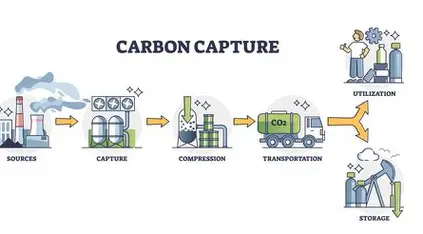
Carbon capture technology is typically broken down into three main stages:
- Capture: Separating CO₂ from other gases produced in industrial processes or directly from the ambient air.
- Transport: Moving the captured CO₂, usually via pipelines, to a storage or utilization site.
- Storage: Injecting CO₂ into deep geological formations, such as depleted oil and gas reservoirs, deep saline aquifers, or unmineable coal seams, where it is permanently trapped.
- Utilization: Using captured CO₂ as a feedstock for producing fuels, chemicals, building materials, or in enhanced oil recovery (EOR).
The capture stage is the most expensive and technically challenging, accounting for roughly 70–90% of the total cost of a CCS system. sciencedirect.com The remainder of this article focuses predominantly on capture technologies, as they represent the active frontier of innovation and cost reduction.
3. Classification of Capture Technologies
Capture technologies can be classified by the point in the industrial process at which CO₂ is separated.
3.1 Post-Combustion Capture
Post-combustion capture separates CO₂ from the flue gas produced after fuel combustion. This is the most widely applicable approach because it can be retrofitted to existing power plants and industrial facilities without major modifications to the combustion process itself. However, the CO₂ concentration in flue gas is typically low (4–15% by volume), and the gas is at atmospheric pressure, which makes separation energy-intensive.
The dominant post-combustion technology is chemical absorption using amine-based solvents. Aqueous amines such as monoethanolamine (MEA) react chemically with CO₂ to form a soluble salt in an absorber column. The CO₂-rich solvent is then pumped to a stripper column, where heat is applied to reverse the reaction, releasing a pure stream of CO₂ for compression and storage while regenerating the solvent for reuse. forcetechnology.com
Advantages of this approach include:
- Suitability for dilute CO₂ streams, such as power plant flue gas.
- Operation at ambient pressures.
- Well-proven at commercial scale in other industries (e.g., natural gas processing).
Disadvantages include:
- High energy demand for solvent regeneration (typically 2.5–4.0 GJ per ton of CO₂ captured).
- Solvent degradation in the presence of impurities like SOₓ, NOₓ, and particulates.
- Corrosiveness of some amine solutions.
- Potential formation of harmful byproducts such as nitrosamines.
To mitigate these problems, advanced solvents—including hindered amines, amino acid salts, and non-aqueous solvents—are under active development. These aim to lower regeneration energy, reduce degradation, and improve stability under real flue gas conditions.
Other post-combustion options include:
- Solid adsorption: Using materials like zeolites, activated carbons, metal-organic frameworks (MOFs), or amine-functionalized solids to capture CO₂ through physisorption or chemisorption. These systems can be designed as temperature-swing, pressure-swing, or vacuum-swing adsorption processes. Adsorption avoids the need for liquid solvents and can potentially reduce energy penalties, but challenges remain in cycle stability, adsorption capacity, and the cost of materials at scale.
- Membrane separation: Membranes act as selective barriers that allow CO₂ to pass through more readily than other gases. They can be polymeric, inorganic, or mixed-matrix membranes. Membrane systems offer modularity, a small footprint, and no requirement for chemical regeneration. However, flue gas streams are low-pressure and high-volume, which means that achieving high CO₂ purity and recovery with a single membrane stage is difficult. Multi-stage configurations and the development of high-permeability, high-selectivity materials are key research areas. sciencedirect.com
- Cryogenic separation: This involves cooling flue gas to very low temperatures so that CO₂ condenses or desublimates and can be separated as a liquid or solid. The advantage is that cryogenic processes can produce high-purity CO₂ without chemical additives. The main drawback is the enormous energy cost of refrigeration, making it less competitive unless low-cost cold energy is available (e.g., from liquefied natural gas regasification).
- Calcium looping: This is a high-temperature process that uses calcium oxide (CaO) to react with CO₂ from flue gas to form calcium carbonate (CaCO₃). The CaCO₃ is then heated in a separate reactor to release pure CO₂ and regenerate CaO. Calcium looping operates at temperatures above 600°C and can integrate with the power plant’s heat cycle to improve overall efficiency. The technology has been demonstrated at pilot scale but faces challenges related to sorbent attrition and the need for large-scale solids handling.
3.2 Pre-Combustion Capture
Pre-combustion capture involves removing CO₂ before the fuel is burned. This is typically accomplished by first converting the fuel into a mixture of hydrogen (H₂) and CO₂ through gasification or reforming, and then separating the CO₂ from the H₂. The hydrogen can then be combusted in a gas turbine or used in fuel cells without producing additional CO₂.
The most common pre-combustion setup is integrated gasification combined cycle (IGCC) with CO₂ capture. In an IGCC plant, coal or biomass is gasified with oxygen and steam to produce syngas (a mixture of CO and H₂). The syngas is then shifted via the water-gas shift reaction (CO + H₂O → CO₂ + H₂) to maximize CO₂ and H₂. The CO₂ is separated using physical solvents such as Selexol or Rectisol, which are more efficient than chemical solvents for the high-pressure syngas stream. The H₂ is then used as a clean fuel for power generation.
Pre-combustion capture benefits from the high pressure and high CO₂ concentration of the syngas, which makes separation less energy-intensive than post-combustion. However, the capital cost of the gasification plant is high, and the technology is complex to operate. Pre-combustion capture is also a natural fit for hydrogen production from fossil fuels with CCS, often referred to as “blue hydrogen.”
3.3 Oxy-Fuel Combustion
Oxy-fuel combustion burns the fuel in a mixture of nearly pure oxygen and recycled flue gas, rather than in air. By eliminating nitrogen from the combustion process, the resulting flue gas is composed primarily of CO₂ and water vapor. After cooling and condensing the water, the remaining gas stream is almost pure CO₂, which can be compressed and stored with minimal further processing.
The main engineering challenge is the air separation unit (ASU) that supplies the oxygen. Cryogenic air separation is the most mature technology, but it consumes a significant amount of energy. Alternative oxygen production methods, such as ion transport membranes, are under development to reduce this penalty.
Oxy-fuel combustion is particularly attractive for new-build power plants and industrial boilers, but it is not suitable for retrofitting existing plants without major modifications to the boiler and air handling systems. It also offers the potential for lower NOₓ emissions due to the reduced nitrogen environment.
3.4 Direct Air Capture (DAC)
Direct air capture refers to technologies that extract CO₂ directly from the ambient atmosphere, where its concentration is about 420 ppm—roughly 300 times more dilute than in flue gas. This makes DAC inherently more challenging and energy-intensive than point-source capture. However, DAC has the unique advantage of being able to address distributed emissions from sources like agriculture, aviation, and legacy emissions already in the atmosphere. It can be deployed virtually anywhere, independent of emission sources.
DAC systems are broadly divided into two categories:
- Liquid solvent systems: These use a high-pH aqueous solution (e.g., potassium hydroxide) to react with atmospheric CO₂, forming carbonate salts. The solution is then processed in a high-temperature kiln (typically 900°C) to release pure CO₂ and regenerate the solvent. This process requires substantial heat and electricity, but companies like Carbon Engineering have demonstrated it at pilot scale.
- Solid sorbent systems: These use amine-functionalized solids or other materials to capture CO₂ from air blown through a contactor. The sorbent is then heated to moderate temperatures (80–100°C) using low-grade heat to release the CO₂. Climeworks and Global Thermostat are prominent developers of this approach. Solid sorbent DAC can be powered by renewable energy or waste heat, reducing the carbon footprint.
DAC currently costs hundreds of dollars per ton of CO₂ captured, compared to $50–100 per ton for many point-source capture applications. However, costs are projected to fall as the technology scales and as the market for carbon removal credits matures. In 2026, a consortium including Progressive Energy, Mission Zero Technologies, and Airhive announced plans for a DAC plant in Teesside, UK, signaling growing commercial interest. energyvoice.com
3.5 Other Emerging Capture Methods
Beyond the mainstream approaches, several other capture methods are under active investigation:
- Biological capture: Using microalgae, cyanobacteria, or engineered plants to fix CO₂ through photosynthesis. These systems can produce biomass that can be further processed into fuels, chemicals, or biochar. While biological rates are slow compared to industrial processes, integrated systems that combine biological and chemical capture are being explored.
- Mineral carbonation: This involves reacting CO₂ with naturally occurring minerals such as magnesium or calcium silicates to form stable carbonates. This is a permanent storage method that mimics natural weathering but accelerated. The challenge is the slow reaction kinetics and the energy required to mine, crush, and activate the minerals. Some processes combine mineral carbonation with industrial waste materials like steel slag or mine tailings.
- Electrochemical capture: These systems use electrochemical cells to modulate the pH of a solution, causing CO₂ to be absorbed or released. They can be designed for selective CO₂ separation and can operate at ambient temperatures, potentially integrating with renewable electricity sources. Research is still at the laboratory and prototype stage.
4. Materials for Carbon Capture
The performance and cost of carbon capture are largely determined by the materials used for separation. The rapid growth in patents related to CO₂ capture in recent years indicates a high level of commercial interest and innovation in this area. cas.org
4.1 Solvents
Amine-based solvents remain the workhorse of chemical absorption. Primary amines like MEA have fast kinetics but high regeneration energy. Secondary and tertiary amines offer lower energy requirements but slower absorption rates. Blended solvents that combine different amines aim to balance these trade-offs. Newer solvent formulations also include additives to reduce degradation, corrosion, and volatility.
Non-aqueous solvents, such as water-lean or phase-change solvents, are gaining attention. They can reduce the energy penalty by avoiding the need to heat large amounts of water during regeneration. Some phase-change solvents separate into a CO₂-rich phase and a lean phase upon heating, allowing for more efficient regeneration.
4.2 Sorbents
Solid sorbents for adsorption or DAC include:
- Zeolites: Microporous aluminosilicates with high surface area and tunable pore sizes. They are effective for CO₂ separation but are sensitive to moisture and can require high regeneration temperatures.
- Activated carbons: Low-cost and high-surface-area materials that primarily capture CO₂ through physisorption. They can be chemically modified to increase CO₂ affinity.
- Metal-organic frameworks (MOFs): Crystalline materials with exceptionally high surface areas and tunable pore chemistry. MOFs can be designed to have high CO₂ selectivity and moderate regeneration energy. Scalability and cost remain challenges.
- Amine-functionalized solids: Silica, alumina, or carbon supports impregnated with amines that chemically react with CO₂. These combine the benefits of solid sorbents with the chemical selectivity of amines.
- Alkali metal carbonates: Potassium carbonate or sodium carbonate supported on porous matrices can react with CO₂ at moderate temperatures and are regenerable with steam.
4.3 Membranes
Membrane materials for CO₂ separation must balance permeability (how fast CO₂ passes through) and selectivity (how well they discriminate against other gases). Polymeric membranes are widely used for natural gas sweetening and are being adapted for post-combustion capture. Inorganic membranes made of ceramics, zeolites, or carbon molecular sieves offer higher temperature and chemical resistance but are more expensive and brittle. Mixed-matrix membranes, which incorporate inorganic fillers into a polymer matrix, aim to combine the processability of polymers with the superior separation properties of inorganic materials.
Membrane contactors, which use a porous membrane as a barrier between the flue gas and a liquid absorbent, offer a hybrid approach that avoids direct gas-liquid contact while providing high surface area. This can reduce equipment size and improve mass transfer. sciencedirect.com
4.4 Advanced and Novel Materials
The search for better materials is relentless. Researchers are exploring ionic liquids, deep eutectic solvents, and liquid-infused materials that can capture CO₂ with minimal energy input. Biomimetic approaches, such as enzyme-catalyzed capture using carbonic anhydrase, aim to achieve the rapid CO₂ conversion rates found in biological systems. pubs.rsc.org However, most of these are still at the laboratory scale.
5. Current Status of Global Deployment
As of 2026, global CCS deployment has grown significantly but remains far below the levels needed to meet climate targets. According to the IEA, around 50 million tons of CO₂ are captured and stored annually from large-scale CCS facilities, a figure that has doubled in the past five years but still represents less than 0.2% of global energy-related CO₂ emissions. climate.mit.edu The IEA had previously projected that 300 million tons per year of CO₂ storage would be achieved by 2020, but a majority of the planned projects were cancelled or put on hold due to high costs and technological challenges. iisd.org
The project pipeline has been expanding rapidly, driven by new policy incentives and corporate net-zero commitments. In the United States, the 45Q tax credit, enhanced by the Inflation Reduction Act, provides up to $85 per ton for CO₂ permanently stored in geological formations, and $60 per ton for CO₂ used in EOR or other utilization. This has spurred a wave of new project announcements. The UK and Europe are also investing heavily in CCS clusters and infrastructure, with projects like the HyNet, East Coast Cluster, and Northern Lights (Norway) leading the way. energyvoice.com
The majority of operational CCS capacity is in the natural gas processing sector, where CO₂ is separated from raw natural gas to meet pipeline specifications. Enhanced oil recovery (EOR) has been the primary driver for CO₂ injection, as the CO₂ is used to increase oil production while being stored in the reservoir. However, the focus is shifting toward dedicated geological storage in saline aquifers, where the sole purpose is emissions mitigation.
6. Economics and Policy Drivers
The economics of carbon capture are heavily influenced by the capture cost, the cost of transport and storage, and the revenue or policy support available. The capture cost varies widely depending on the source and technology:
- For natural gas processing, CO₂ capture costs can be as low as $15–25 per ton because the CO₂ already at high pressure and concentration.
- For post-combustion capture at coal-fired power plants, costs range from $50 to $100 per ton of CO₂ avoided.
- For cement, steel, and other industrial sources, costs are typically $60–120 per ton.
- For DAC, costs are currently in the range of $250–600 per ton, with the potential to fall to $100–200 per ton by 2030 at scale.
Policy support is critical to bridging the gap between these costs and the prevailing carbon price or market value. Key policy instruments include:
- Carbon pricing: Emissions trading schemes and carbon taxes make emitting CO₂ more expensive, thereby making CCS economical. The EU Emissions Trading System (ETS) is a leading example, with carbon prices hovering around €80–100 per ton in recent years.
- Tax credits: The U.S. 45Q, Canada’s CCUS Investment Tax Credit, and similar instruments provide direct financial support.
- Grants and subsidies: Governments are funding large-scale demonstration projects and shared infrastructure like CO₂ pipelines and storage hubs.
- Contracts for difference: The UK government has introduced a CCS business model that guarantees a fixed price for carbon capture, reducing offtake risk.
Corporate commitments to sustainability are also driving demand for carbon capture and carbon removal credits. Many companies are setting net-zero targets and using carbon removal purchases to offset hard-to-abate emissions. This has created a voluntary market for DAC and other carbon removal technologies. cas.org
7. Carbon Capture and Utilization (CCU)
While CCS focuses on permanent storage, CCU aims to convert captured CO₂ into products with economic value. If CO₂ is embedded in durable products like building materials, it can also achieve long-term storage. Otherwise, CCU displaces fossil-derived feedstocks and can contribute to a circular carbon economy. sciencedirect.com
7.1 Conversion Pathways
The main conversion routes for CO₂ are:
- Thermocatalytic hydrogenation: CO₂ is reacted with hydrogen (preferably green hydrogen from electrolysis) to produce fuels and chemicals. The products include:
- Methanol: A versatile chemical and fuel, produced via CO₂ + 3H₂ → CH₃OH + H₂O. Methanol can be used as a transportation fuel, a feedstock for plastics, or a hydrogen carrier.
- Methane: The Sabatier reaction converts CO₂ and H₂ into synthetic natural gas, which can be injected into existing gas grids.
- Synthetic liquid fuels: Through Fischer-Tropsch synthesis, CO₂-derived syngas can be converted into diesel, jet fuel, and gasoline.
- Ethanol, acetaldehyde, and other oxygenates: These can be produced through selective catalytic routes and used as fuels or chemical intermediates.
- Electrochemical reduction: Using electricity, CO₂ can be reduced at a cathode to produce carbon monoxide (CO), formic acid, ethylene, ethanol, and other products. Key advantages include operation at ambient conditions and the ability to directly couple with renewable electricity. Challenges include catalyst selectivity, energy efficiency, and reactor scale-up.
- Photocatalytic reduction: Mimicking natural photosynthesis, photocatalysts absorb sunlight to drive the CO₂ reduction reaction. This is a long-term prospect with the potential for low-cost, sustainable production of solar fuels. Current research focuses on improving quantum efficiency and selectivity.
- Biological conversion: Microorganisms such as algae, bacteria, and yeast can metabolize CO₂ to produce biomass, lipids, proteins, and specialty chemicals. Algae-based systems can also produce biofuels and nutraceuticals. Electro-microbial conversion systems that combine electricity and microbes are an emerging area.
- Mineralization: CO₂ can be reacted with calcium or magnesium-rich materials to produce carbonates for use in construction materials, such as aggregates, cement, or concrete. This is a permanent storage pathway that also generates a valuable product.
7.2 Market Potential and Limitations
The market for CO₂-derived products is potentially vast, but several factors limit its climate impact:
- Scale: The volume of CO₂ that can be utilized in products is dwarfed by the 40+ billion tons of CO₂ emitted annually. The fuels and chemicals market is large, but the energy required for conversion is immense.
- Energy intensity: CO₂ is a thermodynamically stable molecule, and converting it requires significant energy inputs. The climate benefit of CCU depends on the carbon intensity of the energy used.
- Product lifetime: Fuels and chemicals are typically short-lived, meaning the CO₂ is re-released upon combustion or decomposition. Only mineralization and building materials provide permanent storage.
Despite these caveats, CCU is a crucial component of the overall carbon management ecosystem. It provides a revenue stream that can improve the economics of carbon capture and creates a demand for captured CO₂ beyond pure storage.
8. Challenges and Criticisms
Carbon capture technology faces significant technical, economic, and social challenges that must be addressed for it to fulfill its potential.
8.1 High Costs and Energy Penalty
The most frequently cited barrier is the high cost of capture, particularly for post-combustion and DAC applications. The energy penalty of amine scrubbing, for example, can reduce the net output of a power plant by 20–30%. This translates into higher electricity prices and increased fuel consumption per unit of useful energy. While advanced materials and process integration can reduce this penalty, a fundamental thermodynamic minimum always exists because CO₂ is at low concentration and must be concentrated.
8.2 Infrastructure and Scale-Up
A massive CO₂ transport and storage infrastructure is required to support gigaton-scale CCS. Pipelines are the most economical for large volumes over land, but they require public acceptance and regulatory approval. Offshore storage, while abundant, requires expensive subsea infrastructure. The permitting and construction of these networks can take a decade or more. Moreover, the scale-up of capture technologies from pilot to commercial scale has historically been slow and prone to cost overruns.
8.3 Permanence and Monitoring
Ensuring the permanent containment of CO₂ in geological storage is critical. Potential leakage pathways include abandoned wells, faults, and inadequate caprock integrity. Robust monitoring, verification, and accounting (MVA) systems are essential to detect and mitigate any leakage. Advanced monitoring techniques, such as seismic imaging, atmospheric tracers, and geochemical sampling, are being deployed, but long-term liability remains a concern.
8.4 Public Perception and Opposition
Public opposition to CCS projects has been a significant obstacle in some regions. Concerns about safety, induced seismicity, groundwater contamination, and the perception that CCS perpetuates fossil fuel dependence have led to project cancellations. Transparent communication, community engagement, and robust regulatory frameworks are necessary to build trust and social license.
8.5 The “Moral Hazard” Argument
Some critics argue that promoting CCS and CCU risks creating a moral hazard, where the availability of a “technological fix” reduces the urgency to phase out fossil fuels. This concern is particularly acute when CCS is used to justify continued expansion of oil and gas production. The phrase “unabated fossil fuels” has become a flashpoint in international climate negotiations, with advocates for strong climate action calling for a phase-out of all fossil fuels, not just those without CCS. iisd.org The counterargument is that the world will need some fossil fuel use for decades to come, and CCS is essential to manage those remaining emissions.
8.6 Solvent and Sorbent Degradation
For amine-based systems, degradation of the solvent over time leads to increased costs, corrosion, and the formation of potentially hazardous degradation products. Managing these emissions from the capture plant itself is a topic of active research. Projects like “Emissions in the green transition” by FORCE Technology are focusing on developing methods to predict and document emissions from carbon capture facilities, including the formation of nitrosamines and other substances. forcetechnology.com
9. Recent Developments and Future Outlook
The carbon capture landscape is evolving rapidly, with significant advances in both technology and policy.
9.1 Technology Trends
- Integration with hydrogen: Blue hydrogen produced from natural gas with CCS is seen as a key bridging fuel. The combination of hydrogen production and carbon capture is attracting major investment.
- Modular and scalable systems: There is a trend towards smaller, modular capture units that can be deployed at distributed industrial sites. This reduces project risk and capital requirements.
- Digitalization and AI: Machine learning is being used to optimize process parameters, predict solvent degradation, and design new materials more quickly.
- Direct air capture hubs: The US Department of Energy’s Regional DAC Hubs program is funding large-scale DAC projects to drive down costs through shared infrastructure and learning.
- Carbon capture on ships and mobile sources: Research is exploring the feasibility of capturing CO₂ from ship exhausts and even from non-road mobile machinery, though these are early-stage concepts.
9.2 Policy and Market Momentum
The global policy environment for carbon capture has never been more favorable. The Inflation Reduction Act in the US, the EU’s Innovation Fund, and the UK’s cluster sequencing process are providing billions of dollars in support. The number of commercial CCS facilities in the pipeline has grown to over 200, with a potential capture capacity exceeding 300 million tons per year by 2030. However, it remains to be seen how many of these projects will reach final investment decision and construction.
9.3 The Role of CCS in Net-Zero Pathways
Almost all credible net-zero pathways include a significant role for CCS. The IEA’s Net Zero by 2050 scenario envisions 7.6 billion tons of CO₂ captured annually by 2050, with about 95% of that going to permanent storage and the remainder to utilization. Achieving this requires a 100-fold increase in capacity from today’s levels. This will demand an unprecedented scaling of industrial activity, supply chains, and workforce training.
Meeting this challenge will require a combination of:
- Continued innovation in capture materials and processes to reduce costs.
- Massive investment in transport and storage infrastructure.
- Stable and predictable policy support that provides long-term revenue certainty.
- Widespread public engagement and community benefit-sharing.
- Integration of CCS with a broader portfolio of clean energy solutions, including renewables, nuclear, and energy efficiency.
Carbon capture is not a silver bullet, but it is an indispensable tool in the climate mitigation toolbox. As Professor Brad Hager of MIT noted, “I see this as a strategy that will bridge through the next three decades… I hope that cheaper sources of clean electricity will be developed.” climate.mit.edu In the meantime, carbon capture can help us manage the emissions from the fossil fuel infrastructure we are still using, while simultaneously building the infrastructure for a truly net-zero future.
10. Conclusion
Carbon capture technology encompasses a rich and diverse set of approaches for separating CO₂ from industrial and atmospheric sources. From the mature amine scrubbing systems used in natural gas processing to the emerging direct air capture plants that pull CO₂ from ambient air, the field is characterized by rapid innovation and growing deployment. The materials science behind capture—from advanced solvents and solid sorbents to membranes and metal-organic frameworks—is driving incremental and sometimes step-change improvements in efficiency and cost.
The economic viability of carbon capture depends critically on policy support and the creation of markets for captured CO₂, whether through utilization or permanent storage. While challenges remain—high costs, energy penalties, infrastructure needs, and public acceptance—the momentum behind the technology is building. As the world intensifies its efforts to combat climate change, carbon capture will play an increasingly central role in reducing emissions from hard-to-abate sectors and eventually in drawing down the atmospheric CO₂ burden.
The path to gigaton-scale deployment is steep, but the convergence of technological progress, policy incentives, and private-sector investment suggests that carbon capture is moving from a niche option to a mainstream climate solution. The next decade will be pivotal in determining whether the technology can fulfill its promise and help steer the planet toward a sustainable, net-zero future.

Leave a Reply