Part 1 – Introduction, History, and Evolution of Space Technology
Introduction
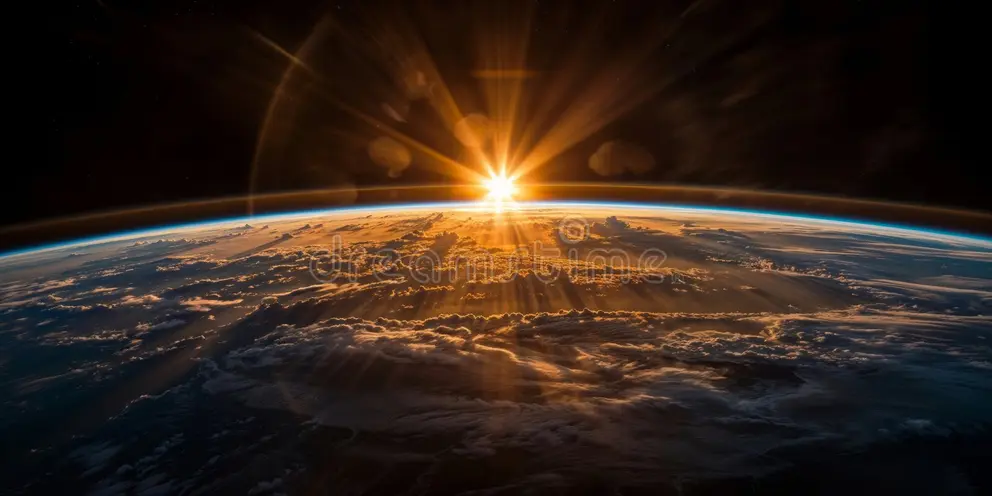
For thousands of years, humans have gazed at the night sky with curiosity, wondering what lies beyond the stars. Ancient civilizations observed celestial bodies to create calendars, navigate oceans, and understand the changing seasons. Today, that curiosity has evolved into one of humanity’s greatest achievements: space technology.
Space technology refers to the collection of scientific knowledge, engineering innovations, and technological systems used to explore, study, and utilize outer space. It includes everything from rockets and satellites to space telescopes, robotic probes, and spacecraft designed for human exploration.
In just over six decades, humanity has progressed from launching the first artificial satellite into orbit to landing sophisticated robots on Mars, building permanent laboratories in space, and developing reusable rockets that significantly reduce the cost of space travel. Space technology has become an essential part of everyday life. Navigation systems, weather forecasting, internet connectivity, disaster monitoring, scientific research, and global communications all rely heavily on technologies developed for space exploration.
The modern era of space technology is no longer limited to government agencies. Private companies such as SpaceX, Blue Origin, Rocket Lab, and many others are driving innovation, making space more accessible than ever before. Nations including the United States, India, China, Japan, Russia, and members of the European Union continue to invest heavily in ambitious space missions aimed at exploring the Moon, Mars, asteroids, and even distant planets.
As humanity prepares for lunar settlements, Mars expeditions, and commercial space tourism, space technology is becoming one of the most important scientific fields of the twenty-first century. It represents not only our desire to explore but also our determination to solve challenges on Earth using knowledge gained beyond it.
What Is Space Technology?
Space technology is the branch of science and engineering dedicated to designing, developing, launching, and operating systems that function in outer space. These systems enable scientists, engineers, astronauts, and researchers to investigate the universe, communicate across vast distances, observe Earth, and perform experiments in environments impossible to recreate on our planet.
Unlike ordinary technology used on Earth, space technology must survive some of the harshest conditions imaginable. Spacecraft face extreme temperatures ranging from over 120°C in direct sunlight to below −150°C in the shadow of planets. They must also withstand intense radiation, the vacuum of space, high-speed micrometeoroid impacts, and powerful vibrations during launch.
Space technology encompasses numerous specialized fields, including:
- Rocket propulsion systems
- Satellite engineering
- Spacecraft design
- Orbital mechanics
- Navigation and guidance systems
- Telecommunications
- Robotics
- Artificial intelligence
- Space medicine
- Materials science
- Remote sensing
- Planetary science
- Astronomy
- Human spaceflight
Every successful space mission combines expertise from these disciplines, requiring thousands of scientists and engineers to work together.
Why Is Space Technology Important?
Many people think space technology is only about astronauts traveling to distant planets. In reality, it affects nearly every aspect of modern life.
Each day, billions of people depend on satellites for navigation, internet access, television broadcasts, weather updates, banking transactions, and emergency communications. Farmers use satellite imagery to monitor crop health. Scientists track climate change using Earth-observation satellites. Rescue teams locate people in disaster-stricken areas using satellite data, while aircraft and ships rely on satellite navigation for safe travel.
Space research has also produced innovations that benefit medicine, engineering, and consumer products. Technologies such as advanced water purification systems, improved medical imaging, lightweight materials, memory foam, scratch-resistant lenses, and enhanced fire-resistant fabrics were either developed for or significantly advanced by space programs.
Moreover, studying other planets helps scientists understand Earth’s climate, geological processes, and potential future challenges. By observing the universe, we gain valuable insights into our own planet and our place within the cosmos.
Objectives of Space Technology
Space technology serves many purposes beyond exploration. Its primary objectives include:
- Exploring planets, moons, asteroids, and comets.
- Understanding the origin and evolution of the universe.
- Improving communication systems worldwide.
- Monitoring Earth’s climate and environmental changes.
- Supporting navigation and transportation.
- Conducting scientific experiments in microgravity.
- Protecting Earth from potential asteroid impacts.
- Developing sustainable technologies for future space habitats.
- Advancing national security and disaster management.
- Inspiring scientific education and international collaboration.
These objectives continue to evolve as new discoveries and technological breakthroughs expand the possibilities of space exploration.
A Brief History of Space Technology
The history of space technology is a story of human curiosity, innovation, and perseverance. Long before rockets existed, astronomers carefully observed the skies using simple instruments. Ancient civilizations in Egypt, India, China, Greece, and Mesopotamia studied the movements of stars and planets to predict seasons, guide navigation, and develop calendars.
The invention of the telescope by Galileo Galilei in the early seventeenth century revolutionized astronomy. His observations of the Moon’s surface, Jupiter’s moons, and the phases of Venus challenged long-held beliefs about the universe and laid the foundation for modern space science.
Centuries later, advances in mathematics and physics enabled scientists to understand gravity, planetary motion, and orbital mechanics. Visionaries such as Konstantin Tsiolkovsky proposed that rockets could one day carry humans into space. Robert Goddard successfully launched the world’s first liquid-fueled rocket in 1926, demonstrating the practicality of modern rocketry.
The mid-twentieth century marked the beginning of the Space Age, driven by rapid technological development and international competition.
The Beginning of the Space Age
The modern Space Age officially began on October 4, 1957, when the Soviet Union launched Sputnik 1, the world’s first artificial satellite. Though it was only about the size of a beach ball, Sputnik demonstrated that objects could successfully orbit Earth. This achievement transformed science, politics, and global technology.
The launch triggered the Space Race, an intense period of competition primarily between the Soviet Union and the United States. Both nations invested enormous resources in developing increasingly powerful rockets and ambitious space missions.
Important milestones soon followed:
- 1957 – Sputnik 1 became the first artificial satellite.
- 1961 – Yuri Gagarin became the first human to orbit Earth.
- 1963 – Valentina Tereshkova became the first woman in space.
- 1969 – Neil Armstrong and Buzz Aldrin landed on the Moon during the Apollo 11 mission.
- 1971 – The first space station, Salyut 1, was launched.
- 1981 – The Space Shuttle era began.
- 1998 – Construction of the International Space Station started.
- 2021 onward – Reusable rockets and commercial human spaceflight became increasingly common.
Each milestone expanded humanity’s ability to explore and utilize space.
Evolution of Space Technology
Space technology has progressed through several major eras.
First Generation (1950s–1960s)
The earliest missions focused on proving that rockets could reach orbit. Satellites were simple, spacecraft were small, and computers had extremely limited processing power.
Second Generation (1970s–1980s)
Attention shifted toward practical applications. Communication satellites, weather satellites, Earth observation, and reusable spacecraft became increasingly important.
Third Generation (1990s–2010s)
International collaboration flourished. The International Space Station became a symbol of cooperation, robotic missions explored Mars and other planets, and satellite technology became essential to global infrastructure.
Fourth Generation (2020s–Present)
The current era is characterized by reusable launch vehicles, commercial spaceflight, advanced robotics, artificial intelligence, miniaturized satellites, lunar exploration initiatives, and plans for human missions to Mars.
Private companies now play a central role, dramatically reducing launch costs and accelerating innovation.
Space Technology: Transforming Humanity’s Journey Beyond Earth
Part 2 – Rockets and Launch Vehicles
Introduction
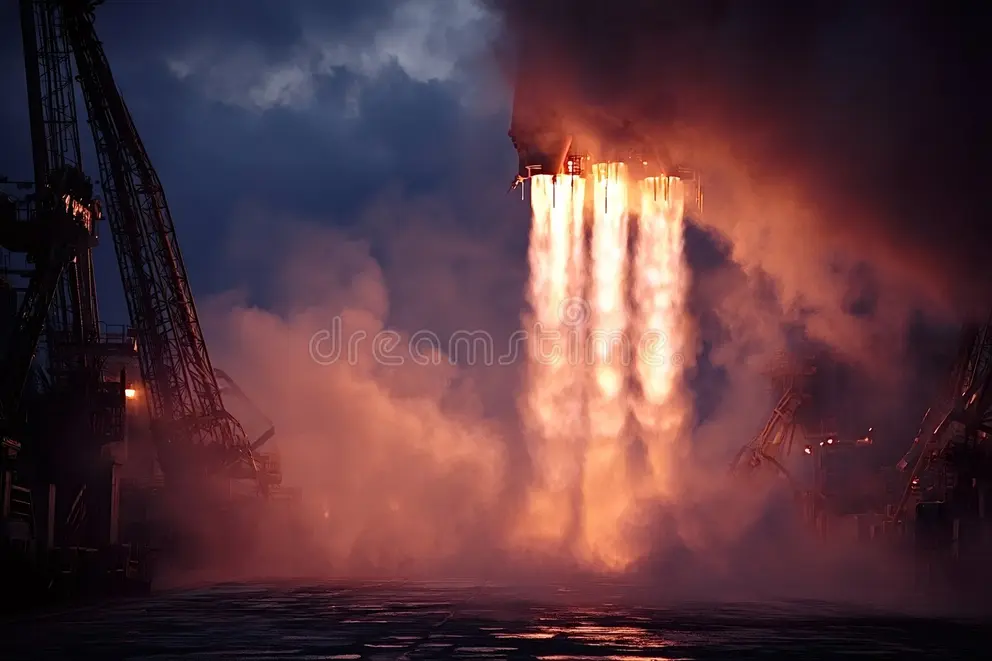
Rockets are the foundation of modern space exploration. Every satellite, space probe, telescope, and astronaut reaches space aboard a rocket. Unlike airplanes, rockets do not need oxygen from the atmosphere because they carry both fuel and an oxidizer. This allows them to operate in the vacuum of space.
Rocket technology has evolved significantly since the first launches in the 20th century. Modern launch vehicles are more powerful, reliable, and reusable, making space exploration more affordable and efficient.
What Is a Rocket?
A rocket is a vehicle that moves by expelling hot gases at high speed through its engines. This creates thrust, which pushes the rocket upward according to Newton’s Third Law of Motion: For every action, there is an equal and opposite reaction.
Rockets are designed to overcome Earth’s gravity and carry payloads such as satellites, astronauts, or scientific equipment into space.
Main Parts of a Rocket
A typical rocket consists of several important components:
Payload
The payload is the object carried into space. It can be a satellite, spacecraft, telescope, or astronauts.
Fuel Tanks
These tanks store the fuel and oxidizer required for combustion.
Rocket Engines
The engines burn fuel to produce thrust, allowing the rocket to lift off and accelerate.
Guidance System
This includes computers and sensors that keep the rocket on its planned path.
Payload Fairing
The fairing protects the payload during launch and is discarded once the rocket leaves Earth’s atmosphere.
Types of Rocket Propulsion
Modern rockets use different propulsion systems depending on the mission.
Chemical Propulsion
The most common system today. It burns fuel and oxidizer to produce high thrust, making it suitable for launching from Earth.
Solid Rocket Motors
These use solid fuel that burns until exhausted. They are simple, reliable, and often used as booster rockets.
Liquid Rocket Engines
Liquid fuel and oxidizer are stored separately, allowing the engine to be started, stopped, and controlled more easily.
Ion Engines
Ion engines use electricity to accelerate charged particles. They produce very little thrust but are extremely fuel-efficient, making them ideal for long-duration space missions.
Rocket Stages
Most launch vehicles use multiple stages. Each stage contains its own engines and fuel. Once the fuel is exhausted, the empty stage is separated to reduce weight.
- First Stage: Provides the thrust needed for liftoff.
- Second Stage: Carries the rocket into higher altitudes.
- Third Stage (if required): Places the payload into its final orbit or sends it toward another planet.
This staging process greatly improves efficiency and reduces the amount of fuel required.
Launch Vehicles
A launch vehicle is the complete rocket system used to carry a payload into space. Launch vehicles are classified according to the weight they can carry.
- Small-Lift Rockets: Used for CubeSats and research satellites.
- Medium-Lift Rockets: Used for communication and navigation satellites.
- Heavy-Lift Rockets: Used for human spaceflight, large satellites, and deep-space missions.
- Super Heavy-Lift Rockets: Designed for Moon and Mars missions.
Different missions require different launch vehicles depending on the size and destination of the payload.
Reusable Rockets
Traditionally, rockets were used only once, making space missions very expensive. Today, reusable rockets have changed the space industry. After completing a mission, the first stage of the rocket can return safely to Earth and be used again.
The advantages of reusable rockets include:
- Lower launch costs
- Faster mission preparation
- Reduced space waste
- Increased launch frequency
This innovation has made space exploration more economical and sustainable.
Orbital Mechanics
After launch, a rocket must place its payload into the correct orbit. Orbital mechanics is the science that studies how objects move under the influence of gravity.
Common types of orbits include:
- Low Earth Orbit (LEO): Used for the International Space Station and Earth observation satellites.
- Medium Earth Orbit (MEO): Used by navigation systems such as GPS.
- Geostationary Orbit (GEO): Used for communication and weather satellites.
- Polar Orbit: Ideal for mapping the Earth’s surface.
Choosing the right orbit depends on the purpose of the mission.
Space Technology: Transforming Humanity’s Journey Beyond Earth
Part 3 – Satellites: The Silent Guardians of Modern Civilization
📷 Image 3.1 (Place at the Beginning)
Image Suggestion: A modern communication satellite orbiting Earth with visible signal beams.
Caption:
Figure 3.1: Satellites orbiting Earth enable communication, navigation, weather forecasting, and scientific research.
Introduction
Satellites are one of the greatest achievements of space technology. Although they remain invisible to most people, they play an essential role in our daily lives. Every time we use GPS, watch satellite television, make an international phone call, check the weather forecast, or access internet services, satellites are working behind the scenes.
A satellite is an object that revolves around another object due to gravity. The Moon is Earth’s natural satellite, while satellites built by humans are called artificial satellites. These are launched into space using rockets and placed in specific orbits depending on their mission.
Today, thousands of artificial satellites orbit Earth, helping scientists study the planet, monitor climate change, improve communication, and support national security.
What Is an Artificial Satellite?
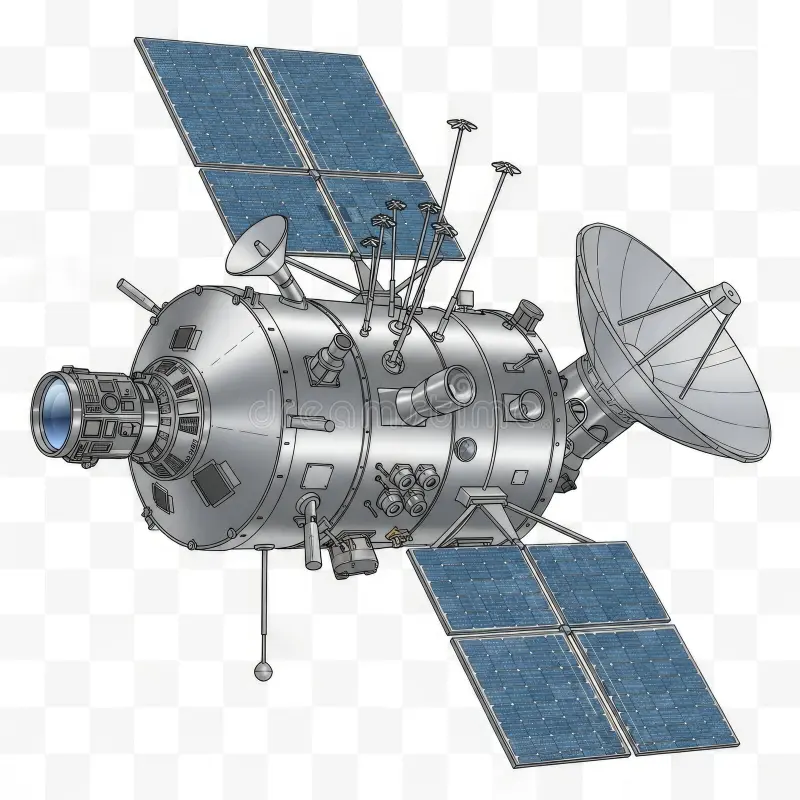
An artificial satellite is a human-made object designed to orbit Earth or another celestial body. It carries instruments such as cameras, antennas, sensors, and scientific equipment to perform specific tasks.
Satellites receive power through solar panels, communicate using radio antennas, and are controlled by ground stations on Earth.
How Do Satellites Work?
After launch, a rocket places the satellite into its required orbit. Once in space, the satellite unfolds its solar panels to generate electricity. It continuously communicates with ground stations by sending and receiving radio signals.
The onboard computer controls the satellite’s operations, while small thrusters help maintain its position and orientation.
The information collected by the satellite is transmitted back to Earth, where scientists and engineers analyze the data.
Types of Satellites
Satellites are designed for different purposes.
1. Communication Satellites
These satellites transmit television broadcasts, telephone calls, internet services, and radio signals across the world.
Examples include satellite TV and broadband internet.
2. Weather Satellites
Weather satellites monitor clouds, storms, rainfall, hurricanes, and temperature patterns. They help meteorologists predict weather accurately and issue disaster warnings.
3. Navigation Satellites
Navigation satellites provide precise location and timing information.
Examples include:
- GPS (United States)
- GLONASS (Russia)
- Galileo (European Union)
- NavIC (India)
These systems help in driving, aviation, shipping, and emergency rescue operations.
4. Earth Observation Satellites
These satellites capture detailed images of Earth’s surface. They monitor forests, oceans, glaciers, pollution, agriculture, and urban development.
5. Scientific Satellites
Scientific satellites study the Sun, planets, stars, and the universe. They collect valuable data that helps scientists understand space and Earth’s environment.
Satellite Orbits
Satellites are placed in different orbits depending on their purpose.
Low Earth Orbit (LEO)
Located about 160–2,000 km above Earth.
Used for:
- Earth observation
- Scientific research
- Space stations
- Imaging satellites
Medium Earth Orbit (MEO)
Located between 2,000 and 35,786 km.
Used mainly for navigation systems like GPS.
Geostationary Orbit (GEO)
Located approximately 35,786 km above Earth.
A satellite in this orbit appears fixed over one location, making it ideal for television broadcasting and weather monitoring.
Polar Orbit
These satellites travel over both the North and South Poles, allowing complete coverage of Earth’s surface over time.
Applications of Satellites
Satellites have transformed nearly every aspect of modern life.
Communication
Satellites enable global telephone networks, internet connectivity, television broadcasting, and emergency communication.
Navigation
GPS-based navigation helps drivers, pilots, ships, and emergency responders determine their exact location.
Weather Forecasting
Weather satellites monitor storms, cyclones, rainfall, and climate patterns, helping save lives through early warnings.
Disaster Management
Satellites help identify floods, wildfires, earthquakes, and landslides, allowing governments to respond quickly.
Agriculture
Farmers use satellite images to monitor crop health, soil moisture, irrigation needs, and harvest planning.
Environmental Monitoring
Satellites track climate change, melting glaciers, deforestation, ocean pollution, and air quality.
Challenges Faced by Satellites
Despite their importance, satellites face several challenges:
- Space debris that may collide with satellites.
- High levels of cosmic radiation.
- Limited fuel for maintaining orbit.
- Extreme temperatures in space.
- Cybersecurity threats targeting communication systems.
- High development and launch costs.
Engineers continue to develop stronger materials, better shielding, and smarter onboard systems to overcome these challenges.
Space Technology: Transforming Humanity’s Journey Beyond Earth
Part 4 – Space Stations, Space Telescopes, and Space Probes
Space Stations
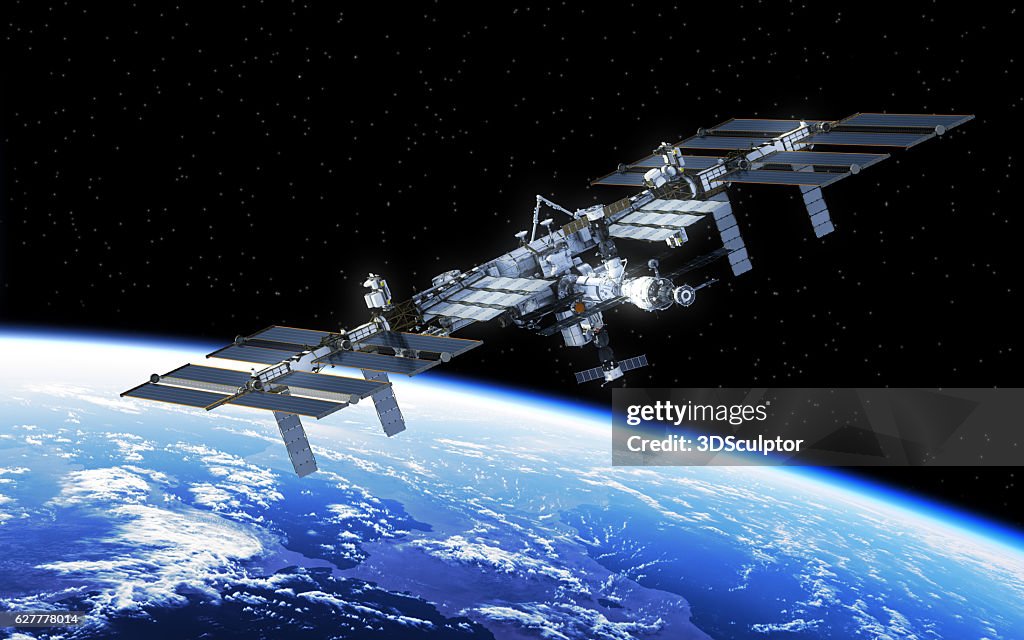
A space station is a large spacecraft where astronauts can live and conduct scientific research for long periods. Unlike rockets, space stations remain in orbit around Earth.
The International Space Station (ISS) is the most famous space station. It is a joint project involving several countries and has been continuously occupied since 2000. Experiments conducted on the ISS help improve medicine, technology, and our understanding of life in space.
Space Telescopes
Space telescopes observe the universe from above Earth’s atmosphere, giving much clearer images than ground-based telescopes.
Some important space telescopes include:
- Hubble Space Telescope – Famous for capturing detailed images of galaxies and nebulae.
- James Webb Space Telescope (JWST) – Studies the earliest galaxies, stars, and distant planets using infrared technology.
These telescopes help scientists understand the origin and evolution of the universe.
Space Probes
A space probe is an unmanned spacecraft sent to explore planets, moons, asteroids, and deep space. Unlike human missions, probes can travel farther and survive in harsh environments.
Famous space probes include:
- Voyager 1 – The farthest human-made object in space.
- Parker Solar Probe – Studies the Sun from closer than any previous spacecraft.
- New Horizons – Explored Pluto and the Kuiper Belt.
Mars Rovers
Mars rovers are robotic vehicles that explore the Martian surface. They collect rock samples, analyze soil, and search for signs of ancient water or life.
Some well-known rovers are:
- Sojourner
- Spirit
- Opportunity
- Curiosity
- Perseverance
These missions have greatly expanded our knowledge of Mars.
Part 5 – Human Spaceflight and Life in Space
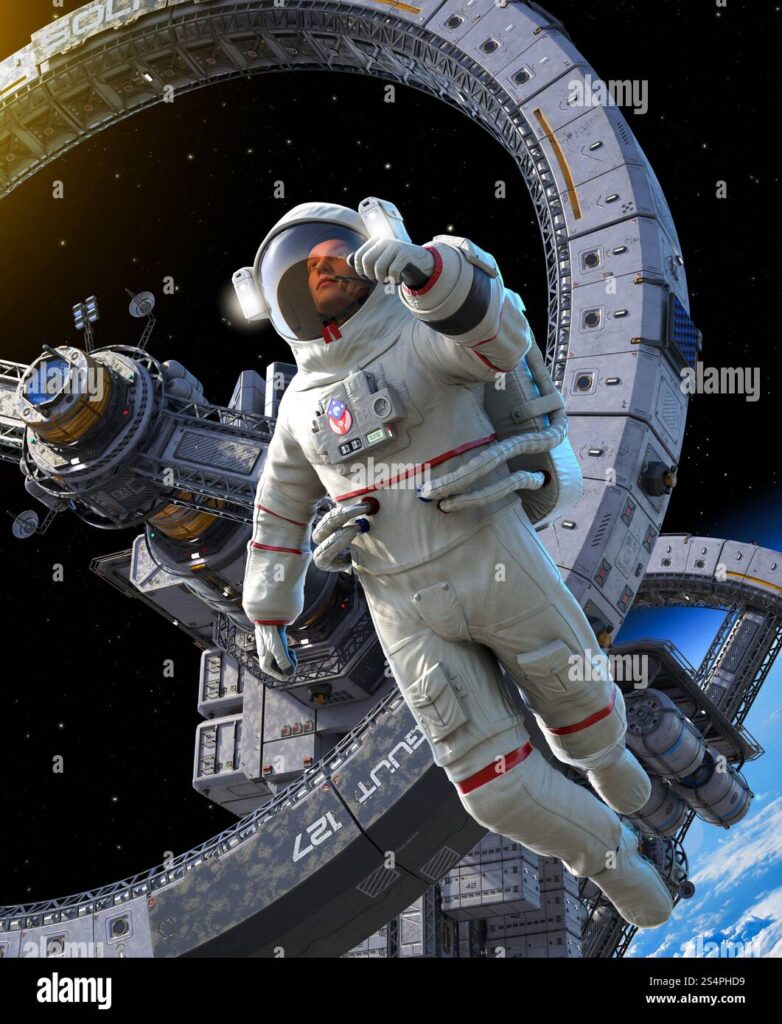
Human Spaceflight
Human spaceflight involves sending astronauts into space to conduct research, maintain spacecraft, and explore new worlds. Astronauts undergo years of training in science, engineering, survival, and physical fitness.
Living in Space
Life aboard a space station is very different from life on Earth. Due to microgravity, astronauts float instead of walking. They eat specially prepared food, sleep in sleeping bags attached to walls, and exercise daily to prevent muscle and bone loss.
Spacesuits
Spacesuits protect astronauts from the vacuum of space, extreme temperatures, and harmful radiation. They also provide oxygen, communication systems, and temperature control.
Challenges
- Muscle and bone weakening
- Radiation exposure
- Isolation and mental stress
- Limited food and water
Conclusion: Human spaceflight helps scientists understand how people can survive during future missions to the Moon and Mars.
Part 6 – Space Robotics and Artificial Intelligence
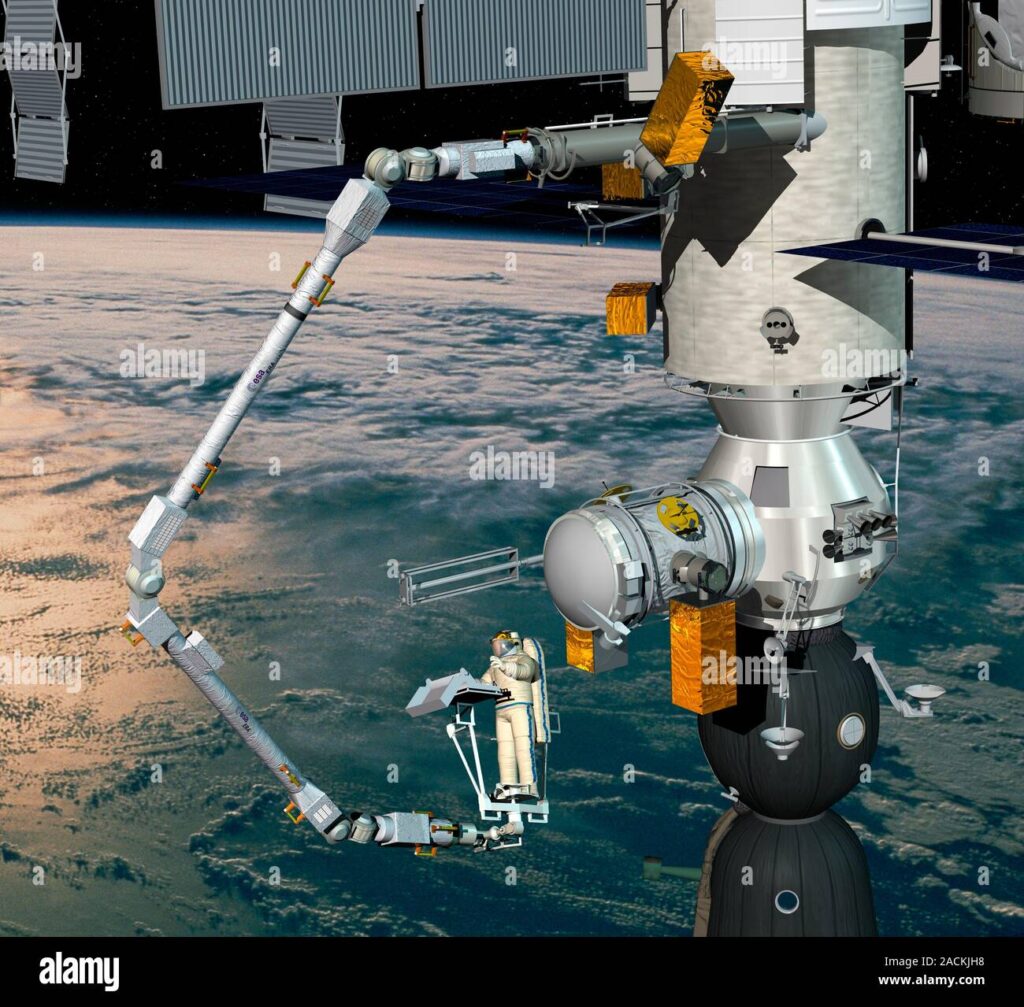
Space Robotics
Robots are widely used in space because they can work in dangerous environments. They repair satellites, explore planets, and assist astronauts.
Artificial Intelligence (AI)
AI helps spacecraft make decisions, navigate autonomously, detect faults, and analyze large amounts of scientific data.
Benefits
- Reduces human risk
- Improves mission accuracy
- Operates continuously
- Supports deep-space exploration
Conclusion: Robotics and AI are making future space missions safer, smarter, and more efficient.
Part 7 – Commercial Space Exploration and Space Tourism
Commercial Space Industry
Private companies now play an important role in space exploration by developing rockets, satellites, and spacecraft. They work alongside government agencies to reduce costs and increase innovation.
Space Tourism
Space tourism allows private citizens to travel into space for short periods. Although currently expensive, it is expected to become more accessible in the future.
Future Possibilities
- Lunar tourism
- Commercial space stations
- Space hotels
- Cargo transport to the Moon and Mars
Conclusion: The growing commercial space industry is opening new opportunities for exploration, business, and scientific research.
Part 8 – Applications of Space Technology
Major Applications
- Communication: Television, internet, and mobile networks.
- Navigation: GPS and satellite navigation systems.
- Weather Forecasting: Predicting storms and climate changes.
- Agriculture: Monitoring crops and soil conditions.
- Disaster Management: Detecting floods, fires, and earthquakes.
- Environmental Monitoring: Tracking pollution and climate change.
- Scientific Research: Studying Earth and the universe.
Conclusion: Space technology is essential not only for exploration but also for improving life on Earth.
Part 9 – Challenges in Space Exploration
Major Challenges
- High mission costs
- Space debris
- Radiation exposure
- Long travel times
- Limited resources in space
- Technical failures
Scientists are developing reusable rockets, advanced shielding, and better spacecraft to overcome these challenges.
Conclusion: Solving these challenges is essential for safe and sustainable exploration of space.
Part 10 – Future of Space Technology and Conclusion
Future Technologies
The future of space technology includes:
- Permanent Moon bases
- Human missions to Mars
- Space mining
- Nuclear-powered spacecraft
- Advanced AI-controlled missions
- Space-based solar power
- Faster and reusable launch systems
Developed by ASMIT MALL

Leave a Reply